
Skip to content
SediLogic Technologies

Grease traps

Grease interceptors at a large resort

Three restaurant kitchens sharing interceptors that were filling faster than the pump-out schedule could keep up with, with grease backing up into sinks between visits.

71%

reduction in fats, oils and grease

Field result
Duty
Grease traps
Sector
Industrial
Treatment window
Ongoing, first results in weeks
What was counted
Fats, oils and grease
  • A 40 per cent reduction reported in treatment cost
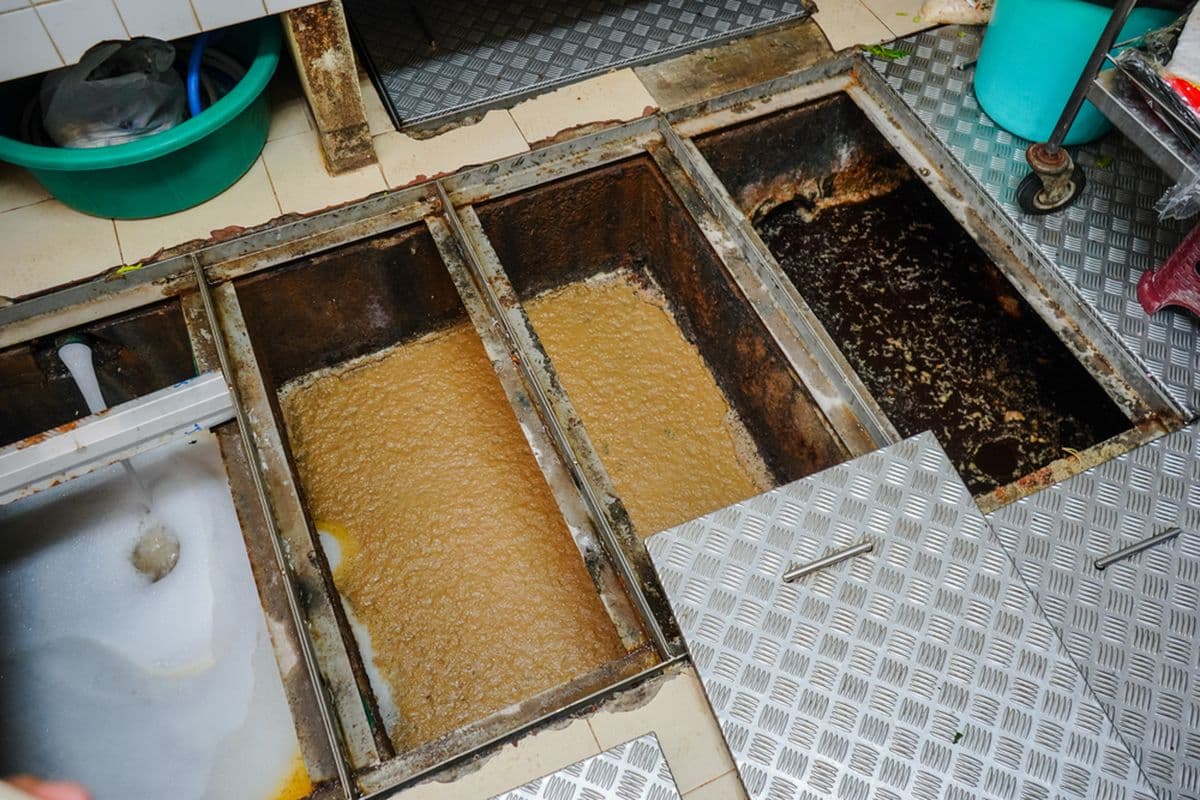
Open grease trap interceptor showing separated surface layer.
Illustration — an open grease interceptor, not the trap described on this page.

01The plant

What was being treated

Three restaurant grease interceptors on a single resort property.

02Before

How the material got there

Grease was filling the interceptors faster than the pump-out schedule could keep up with, backing up into sinks between visits. A calcium nitrate programme had not resolved it.

03Treatment

What was applied, and how

The calcium nitrate was replaced with a liquid product dosed by automated pump from a five-gallon pail at each kitchen, upstream of the interceptor, three times a day at low-flow periods. Dosing was timed away from cleaning-chemical and hot-water discharges, which would have destroyed the product before it reached the grease.

Every result in this library was measured at an operating plant treating with one of the formulations SediLogic supplies, over the window stated above. It is a field result published as reported, not a controlled trial we ran.

04Sizing

What the quantity was set against

Timed to the kitchen's own flow pattern rather than sized against a volume — a continuously fed interceptor is a different problem from a standing lagoon.

05Method

How the result was established

Interceptor measurements taken before treatment and during it.

06Outcome

What followed

Annual treatment cost down about 40 per cent against the programme it replaced.

At the start

Grease accumulating faster than the pump-out interval, backing into sinks, organic build-up on pipe walls.

At the close

71 per cent less grease on average across the three interceptors, backups stopped and the pipe-wall build-up cleared.

07Limits

What this record does not establish.

Three interceptors at one property under one kitchen management is a narrow base. Nothing was left untreated, and the 71 per cent is an average across the three with no spread published. How grease was measured in the interceptor is not stated.

Only the volatile organic fraction of a sludge responds to any of this. Grit, sand, silt, mineral precipitates and plastics remain at any dose, here and everywhere else.

What we would supply

For this duty, in our range.

SediLogic Liquid FOG is the article in the range built for this — a liquid concentrate aimed at fats, oils and grease and dosed into the collection system rather than at a lagoon blanket. A trap takes a metered or poured dose; a sinking solid has nothing to sink to.

SediLogic holds a written dose table for wastewater lagoons and for no other duty, so the planner will not size a trap and we will not guess at one. Tell us the trap, the flow and what it is loaded with, and a quantity is settled with a person.

Read next

The same duty, measured somewhere else.

  • Grease traps

    Supermarket drain lines

    Industrial2 years

    95%

    fewer blockage incidents in the second year

    Field result

    Grease building in kitchen and deli drain lines fast enough to generate a steady run of blockages and emergency call-outs.

    • 65 per cent fewer in the first year
    Fats, oils and grease
  • Grease traps

    Supermarket grease trap, Japan

    IndustrialNot published

    50%

    less oil accumulation in the trap

    Field resultNo method stated

    Oil accumulating in the trap faster than the cleaning contract allowed for, and taking a long time to clear at each visit.

    • Cleaning time at each pump-out roughly halved
    Fats, oils and grease
  • Grease traps

    Commercial grease trap

    Industrial300 days

    91%

    reduction in BOD and suspended solids in the trap

    Field result

    A trap whose contents were strong enough that every pump-out was charged as high-strength waste.

    • Pump-out charge $1,029 to around $20 per service
    Fats, oils and greaseBOD and CODSuspended solids

All field results

Your lagoon next

This was measured somewhere else.

A different plant, a different loading and a different sludge. What decides your result is how much of your own accumulation is organic and treatable, and whether the dose is sized against the lagoon in front of us rather than read off this page. Tell us the dimensions and we will size it.