
Products
Choose a product for your lagoon
Choose a format for the material you need to treat. Sinking solids deliver bacteria to bottom sludge. Soluble pouches disperse in the water column, with a cold-weather option for low temperatures. We also supply liquid blends for metered dosing. Our formulations are made to our specifications and tested against competing products and across sludge types.
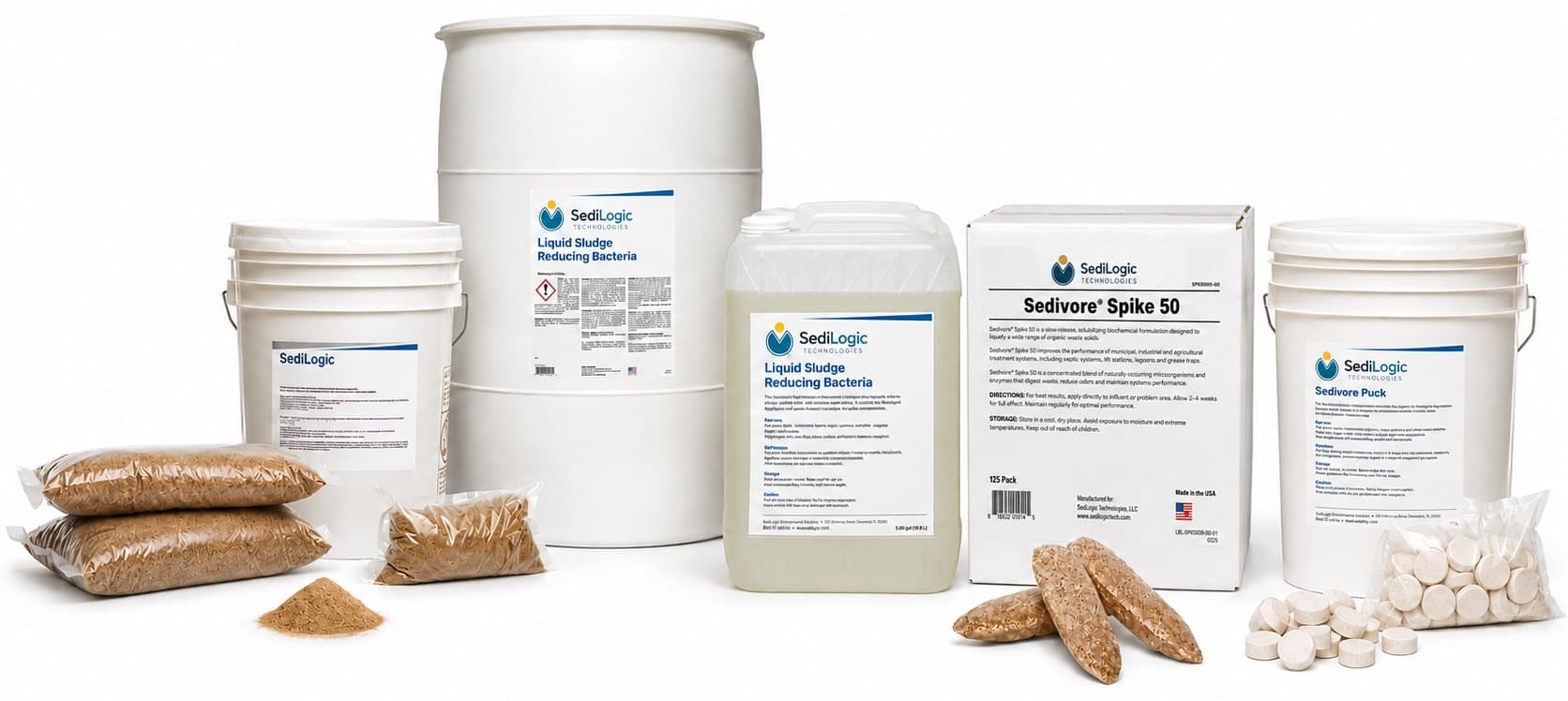
| Sedivore Spike | Sedivore Puck | SediLogic Maintain | Sedivore Polar | |
|---|---|---|---|---|
| Format | Dense sinking solid | Dispersible sinking solid | Dry water-soluble pouch | Dry water-soluble pouch, cold-weather blend |
| Target material | Accumulated organic bottom sludge | Accumulated organic bottom sludge | Maintenance dosing and general organic load | Organic load in a lagoon running cold |
| Where it works | Sludge interface | Sludge interface | Water column | Water column |
| Best fit | An established blanket under depth | A shallower blanket, or one spread across a wide area | An adequately mixed lagoon | An adequately mixed lagoon working through cold water |
| Pack | Case of approximately 125 sinking solids; each solid approximately 150 g (5 oz), 13.5 cm long by 4 cm across (5.3 × 1.6 in) | 22 lb (10 kg) pail of dispersible solidsThe pail is confirmed. The unit size within it is SediLogic's format specification and is not yet confirmed against the article quoted. | 25 lb pail containing 25 × 1 lb water-soluble pouches | 25 lb pail containing 25 × 1 lb water-soluble pouches |
| Quote basis | Lagoon-specific dose plan | Lagoon-specific dose plan | Lagoon-specific dose plan | Lagoon-specific dose plan |
| Price and ordering | $495 per pail22 lb 1 Added.View cart No dose table is published for this format, so we settle the quantity with you. | $632 per pail25 lb 1 Added.View cart No dose table is published for this format, so we settle the quantity with you. |
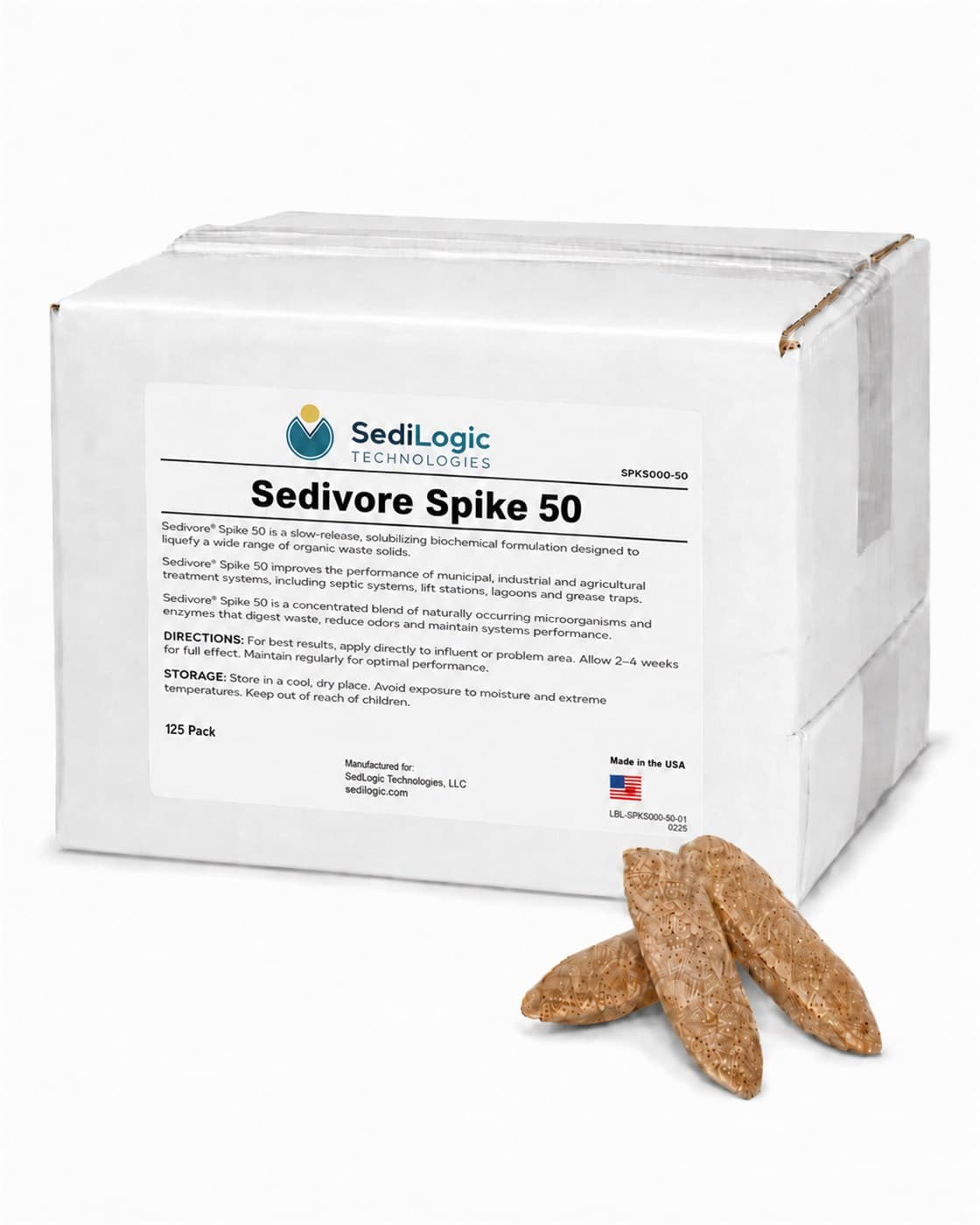
Sedivore Spike
Dense sinking solid
A dense sinking solid for organic sludge at the bottom of a lagoon. It falls through the water column and releases bacteria at or within the sludge surface.
Spike is designed for deeper cells, where the bacteria need to reach a settled sludge blanket. Its weight and shape carry the blend down through the water.
Specifications, limitations and when not to buy it
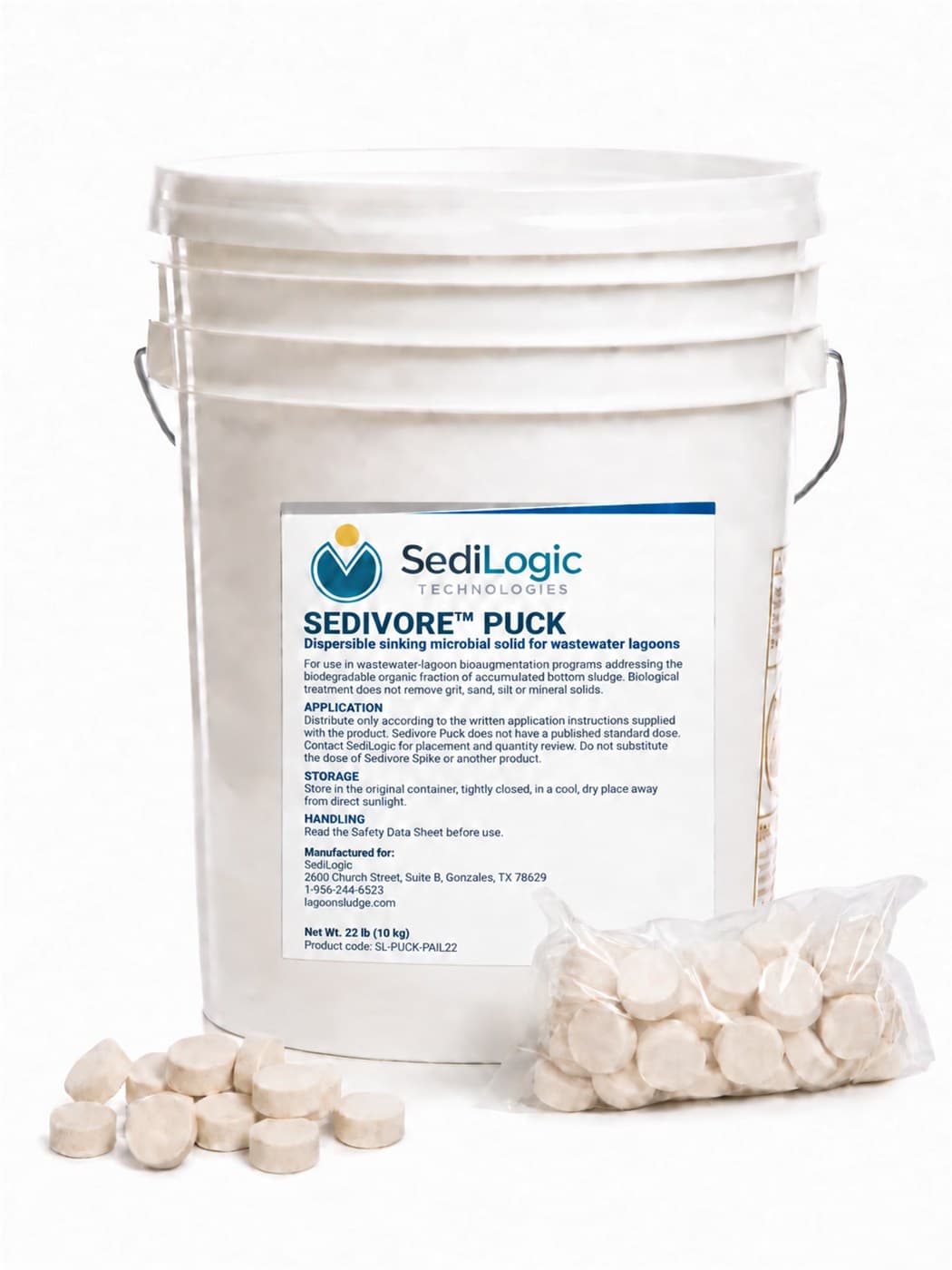
Sedivore Puck
Dispersible sinking solid
A smaller sinking solid for distributing bacteria across the sludge bed. SediLogic's format specification spans roughly 14 g to 170 g per unit. Contact us to confirm the available unit size and quantity for your application.
Pucks allow more placements across the bed, including edges and corners, and can be applied from the bank by hand. Spike is designed for delivery through greater depth. Ask us which format suits your lagoon; the planner does not calculate a Puck quantity.
Specifications, limitations and when not to buy it
$495
per pail22 lb
1Added.View cart
No dose table is published for this format, so we settle the quantity with you.
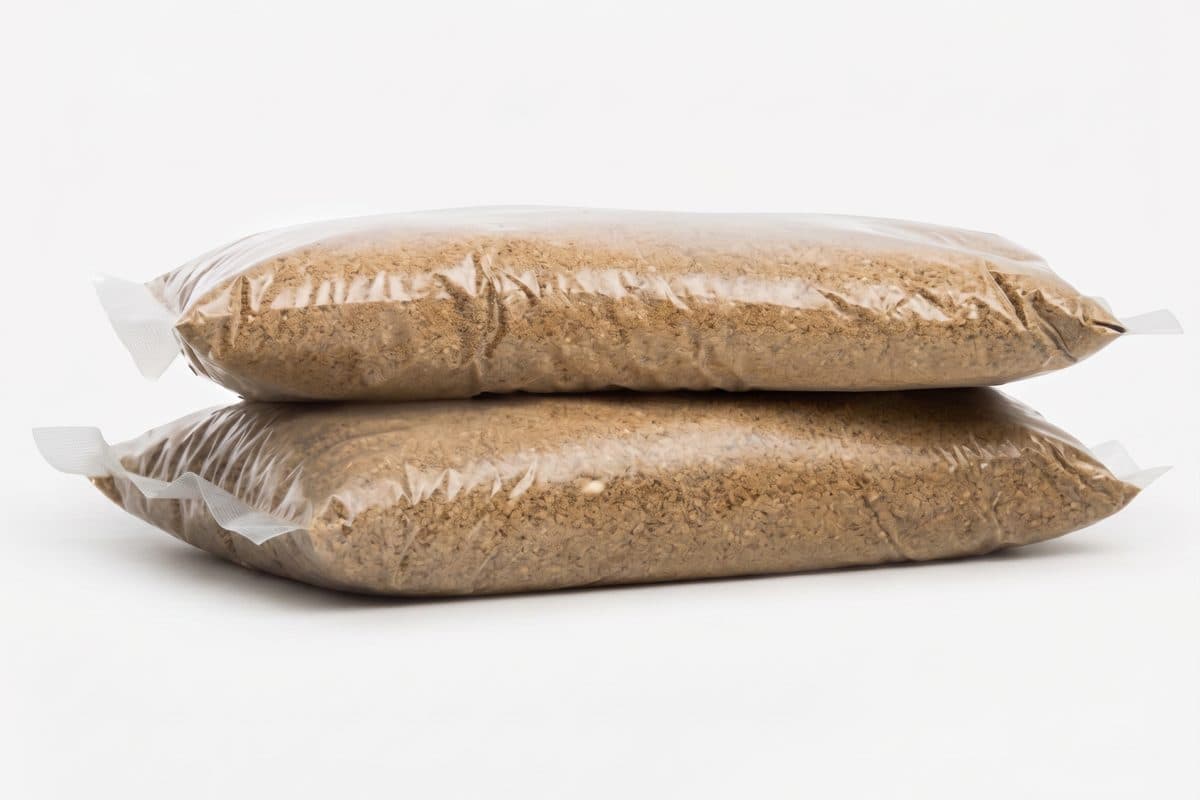
SediLogic Maintain
Dry water-soluble pouch
A soluble pouch for maintenance dosing and organic load in a well-mixed water column. For an established bottom sludge blanket, use a sinking solid.
Maintain disperses in the water column. It is intended for ongoing organic load, rather than direct delivery to settled bottom sludge.
Specifications, limitations and when not to buy it
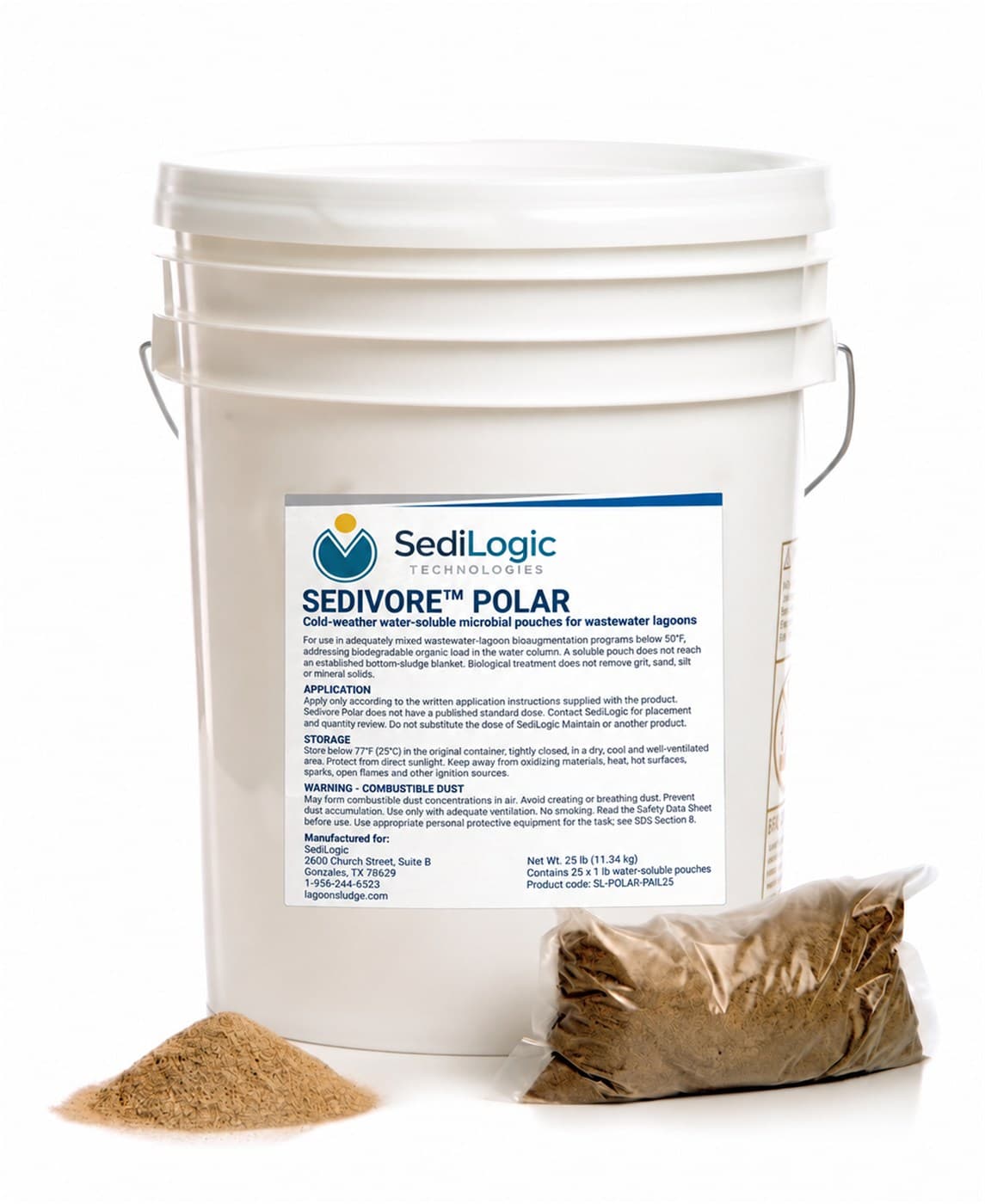
Sedivore Polar
Dry water-soluble pouch, cold-weather blend
A cold-water soluble pouch for organic load in the water column. Polar uses strains selected for temperatures at which a standard blend slows down.
Consider Polar when the water falls below about 50°F. It costs $632 per 25 lb pail, compared with $516 for Maintain. In warmer water, consider the standard pouch. For settled bottom sludge, ask about a sinking solid.
Specifications, limitations and when not to buy it
$632
per pail25 lb
1Added.View cart
No dose table is published for this format, so we settle the quantity with you.
For large systems
SediLogic Maintain Concentrate
High-concentrate soluble pouch
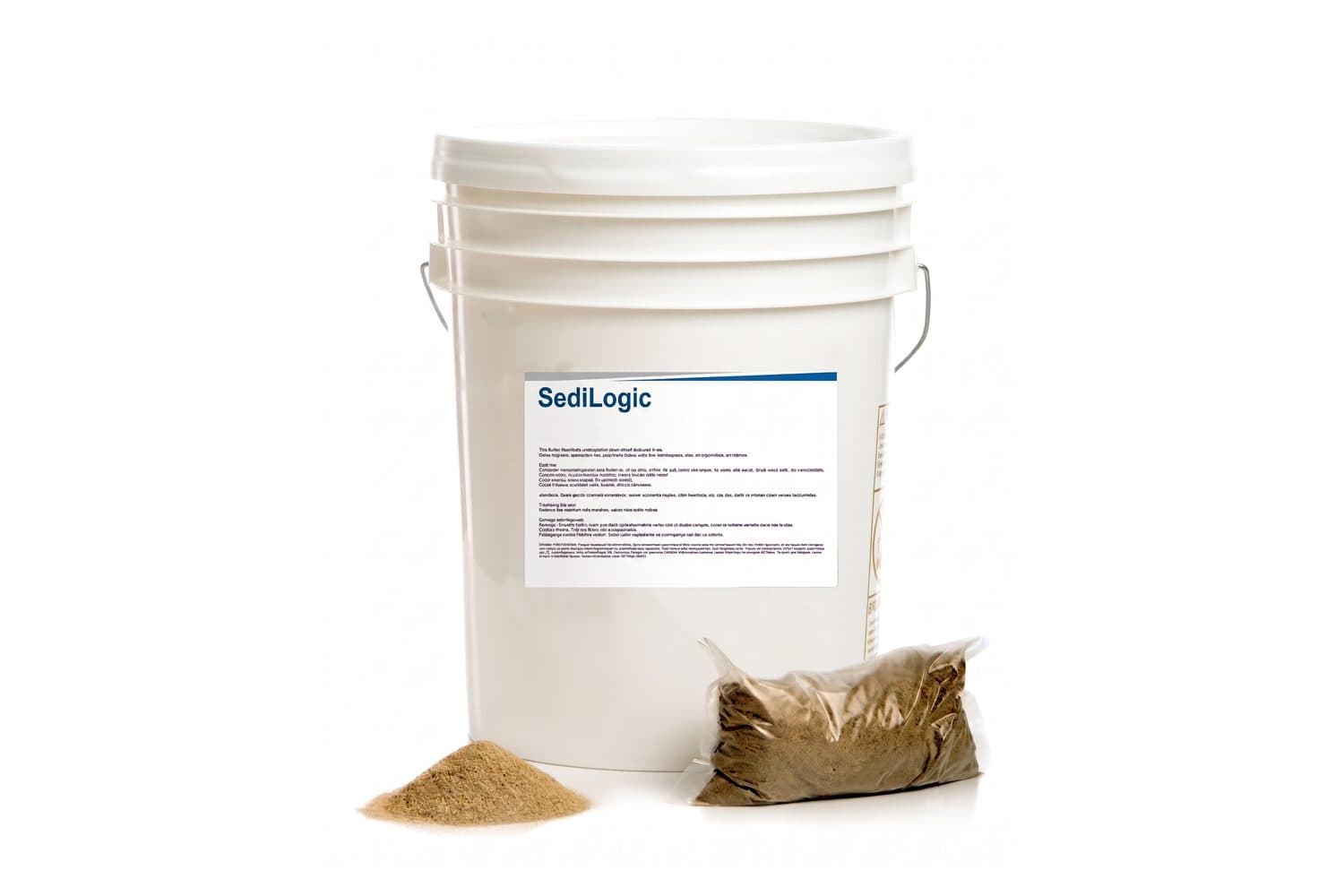
A concentrated version of Maintain for the water column, at roughly ten times the standard concentration. Large programmes can use fewer pails to ship, store and handle.
Maintain Concentrate reduces the amount of carrier shipped with the organisms. It serves the same water-column application and does not change how much of the sludge is treatable. A settled bottom blanket still calls for a sinking solid. We confirm concentrate quantities during review.
Specifications and when not to buy SediLogic Maintain Concentrate
Maintain, or the concentrate?
Maintain Concentrate serves the same water-column application as the standard pouch. Its higher concentration can reduce the number of pails needed for a large lagoon, saving storage space and handling.
| SediLogic Maintain | SediLogic Maintain Concentrate | |
|---|---|---|
| Format | Dry water-soluble pouch | High-concentrate soluble pouch |
| Target material | Maintenance dosing and general organic load | General organic load on large systems |
| Where it works | Water column | Water column |
| Best fit | An adequately mixed lagoon | A large lagoon where standard pouch counts get unwieldy |
High concentration
Higher-concentration pouches for larger programmes
Plus is a grade, not a different treatment. Both water-column blends are also made at 50 billion CFU/g and supplied in the same dry water-soluble pouch, in a 10 kg pail. Nothing else about them changes: the same organisms, dosed into the same place, doing the same work. A programme that would run to a stack of standard-strength pails arrives as a fraction of them.
Higher concentration can reduce freight, storage and handling. It does not increase the treatable fraction: grit, sand, silt and mineral precipitates remain at any strength. A settled blanket still needs a sinking solid delivered to it.
Neither Plus grade has a published dose method, so the planner does not calculate a quantity for them. Contact us to discuss your lagoon. We do not scale a standard-strength rate to a different concentration.
SediLogic Maintain Plus
Dry water-soluble pouch, high concentration
A higher-concentration version of Maintain in dry water-soluble pouches. Intended for large or long programmes where reducing the number of pails would simplify freight, storage and handling.
This grade contains less carrier relative to the culture. Higher concentration can reduce handling, but it does not increase the treatable fraction or deliver the blend to the bottom sludge. Only volatile organic solids respond; a settled blanket still needs a sinking solid.
Specifications, limitations and when not to buy it
Sedivore Polar Plus
Dry water-soluble pouch, high concentration, cold-weather
A higher-concentration version of Polar in dry water-soluble pouches, intended for large or long cold-water programmes.
Consider Polar Plus when you need both a cold-water blend and fewer pails to handle. Concentration does not change the organisms' treatment limits. For warmer water, consider a standard-temperature blend; for smaller programmes, compare the standard Polar pouch.
Specifications, limitations and when not to buy it
Standard, or Plus?
Each pair offers the same blend at two concentrations. Compare the quantity to ship, store and apply. Choose the cold-weather grade according to water temperature.
| SediLogic Maintain | SediLogic Maintain Plus | Sedivore Polar | Sedivore Polar Plus | |
|---|---|---|---|---|
| Pack | 25 lb pail containing 25 × 1 lb water-soluble pouches | 10 kg (22 lb) pail of dry water-soluble pouchesThe pail is the specified pack. The number of pouches in it, and the weight of each, are not published. | 25 lb pail containing 25 × 1 lb water-soluble pouches | 10 kg (22 lb) pail of dry water-soluble pouchesThe pail is the specified pack. The number of pouches in it, and the weight of each, are not published. |
| Concentration | Not publishedNo viable count is published for this product. | 50 billion CFU/gPer gram, at manufacture. | Not publishedNo viable count is published for this product. | 50 billion CFU/gPer gram, at manufacture. |
| Best fit | An adequately mixed lagoon | A large or long programme where standard-strength pail counts add up | An adequately mixed lagoon working through cold water | A large or long cold-water programme where standard-strength pail counts add up |
The standard grades have no published viable count, so we cannot give a numerical concentration ratio between standard and Plus.
01What we do not sell
What the range does not cover
We do not offer a dedicated industrial high-load blend. Check the intended application and limitations of each product before choosing one.
We do not offer small trial packs. A useful lagoon trial needs a quantity based on the manufacturer’s dose method and the area or load being treated. Buying too little can make the trial inconclusive.
Nitrification deserves its own note, because it is the most common thing we are asked for and cannot supply. Nitrifying bacteria do not survive drying, so no dry product can address an ammonia or total nitrogen permit — ours included. Any dry product sold for that purpose is being sold on a claim its format cannot support.
02The liquid line
Liquid treatments for metered dosing
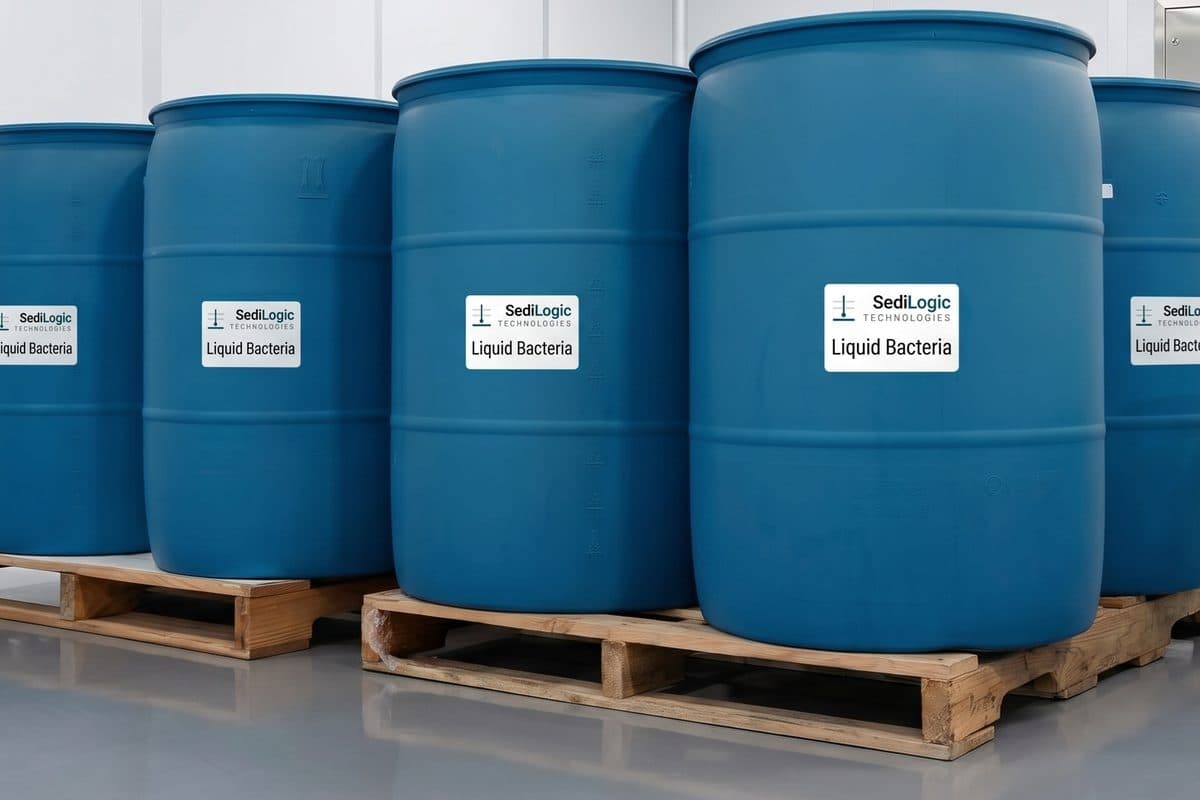
A liquid concentrate for digesting organic material in systems with metered or poured dosing, including flowing channels and confined structures.
Choose Liquid for organic load in the water column where the installation uses a liquid dosing system. It is made to our specification and benchmarked alongside the dry range. For a settled bottom blanket, we recommend a sinking solid.
The full liquid line
The liquid range includes a general-purpose concentrate, a cold-water blend and a blend for fats, oils and grease. Each is made to our specification and benchmarked alongside the dry range. We review the application before recommending one.
| SediLogic Liquid | SediLogic Liquid Cold | SediLogic Liquid FOG | |
|---|---|---|---|
| Format | Liquid concentrate | Liquid concentrate, cold-weather blend | Liquid concentrate, FOG-targeted |
| Target material | Organic load in systems a solid cannot be dosed into | Organic load in liquid-dosed systems running cold | Fats, oils and grease, and the collection systems where they gather |
| Where it works | Metered or poured, as the installation allows | Metered or poured, as the installation allows | Dosed into the collection system — trap, drain or wet well |
| Best fit | Dosing points and flowing systems that take a metered liquid | Liquid-dosed systems working through cold conditions | A grease-dominated load upstream of the lagoon, not the lagoon blanket |
For a settled bottom blanket that can be reached with a solid, we recommend a sinking solid.
03Getting started
Get a free dosing plan for your lagoon.
Use the planner to check whether biological treatment suits your lagoon and get an estimate. It runs in your browser, and you can see the result before sending us your details. There is no obligation to order.
Where a written dose method is available, the planner applies it to your lagoon details and rounds the quantity up to whole packs. We check the inputs and quantities before confirming your quote.
Operators on a maintenance schedule receive a 5% repeat-supply discount. No upfront contract is required.