
Alternatives to lagoon dredging
A straight comparison of the alternatives to mechanically dredging a wastewater lagoon, including what each one can achieve and what it cannot.
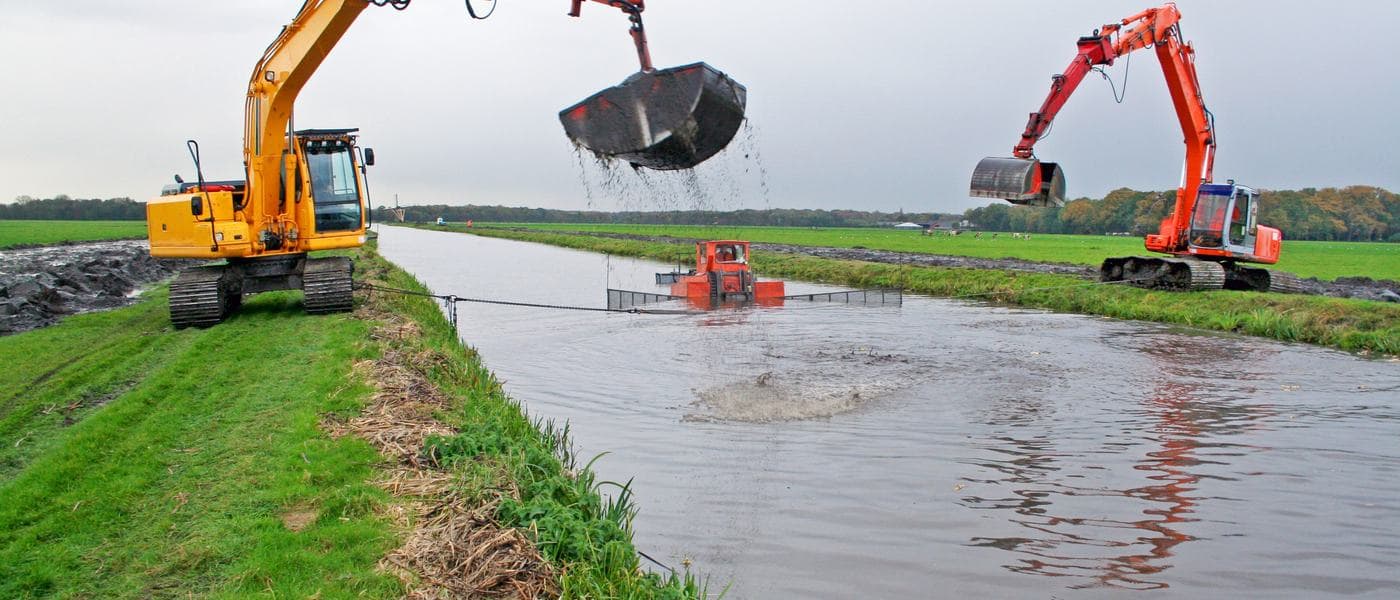
The short answer
There is no alternative that removes everything a dredge removes, because mechanical dredging is the only method that takes out the inert fraction. The realistic alternatives defer or reduce the event rather than replace it. Biological reduction digests the volatile organic fraction and recovers capacity without taking the cell out of service. Improved mixing and aeration address conditions that limit treatment and can slow accumulation. Partial or targeted dredging removes the worst areas at lower cost than a full clean-out. In practice the decision is usually not whether to dredge but when, and a biological programme is best evaluated on how many years it moves that date and at what annual cost.
The comparison
| Approach | What it achieves | What it does not |
|---|---|---|
| Mechanical dredging | Removes all accumulated material, inert included, and fully restores design volume. The only complete answer. | Very expensive, disruptive, and often requires taking a cell out of service. Creates a dewatering and disposal problem of its own. |
| Biological reduction | Digests the volatile organic fraction in place, recovering capacity without taking the lagoon offline. Cost is an annual operating line item rather than a capital event. | Cannot act on sand, grit, silt, mineral precipitates or plastics. Performs poorly in a poorly mixed lagoon. Seasonal, because activity depends on water temperature. |
| Mixing and aeration | Improves overall treatment performance and the conditions biological treatment depends on. Complementary to bioaugmentation rather than an alternative. | Does not itself remove accumulated sludge. Capital cost and ongoing power consumption. |
| Partial or targeted dredging | Removes the worst-affected areas — typically near the inlet — at a fraction of the cost of a full clean-out. | Requires a contour survey to target properly. Leaves the rest of the accumulation in place. |
How to frame the decision
The useful comparison is not price per pound of product against price per dry ton of dredging. It is cost per dry ton of sludge actually removed, against the alternative, over a defined period. Mechanical dredging is commonly quoted in the region of $350 per dry ton, though the broader independently cited range is nearer $300 to $800 and almost every published figure tracks back to a vendor rather than an independent engineering study. Against a full clean-out that could run to seven figures, a biological programme costing several thousand dollars a year that defers the event by several years is a straightforward proposition to put in front of a council.
Where the target is the settled blanket rather than the water above it, only a sinking solid reaches it at all, which is what Sedivore Spike is specified for. It bears repeating that this acts on the volatile organic fraction alone: grit, sand and mineral precipitates remain at any dose, and where those dominate an accumulation, dredging is the answer.
What to do first
Get a real dredging quotation for your own lagoon, and get a survey that establishes volume and the volatile fraction. Those two documents together let you compare the options on your actual numbers rather than on published averages, and they are worth having before you talk to anybody selling either service.
Common questions
- Can bacteria eliminate the need to dredge a lagoon?
- No. Biological treatment digests the volatile organic fraction of the sludge only. Sand, grit, silt, mineral precipitates and plastics are not biodegradable and remain regardless of dose, product or format, so mechanical removal is eventually required. Biological treatment defers the event and recovers capacity in the meantime.
- Is biological treatment cheaper than dredging?
- The annual cost is far lower than a clean-out, but they are not equivalent purchases. Dredging is a capital event that restores full design volume, and biological treatment is an operating cost that reduces the treatable portion of the accumulation. The meaningful comparison is cost per dry ton removed and how many years the programme defers the capital event.
Related reading
Products for this duty
Find out which product fits your lagoon.
Describe it and the planner selects a format — or tells you that biological treatment is the wrong answer for it. Nothing is captured.