Skip to content
SediLogicTechnologies

Why us

A formulation of our own — and the tests to back it.

Nearly every lagoon product on the market is the same short list of Bacillus strains, fermented by a few contract manufacturers and sold under a dozen labels. We started somewhere else: a blend specified for lagoon sludge, benchmarked against the alternatives, tested across different sludge — and, if you want it, assessed against a sample of your own before you spend anything.

A laboratory scientist preparing a sludge sample for examination under a microscope.

01Our own formulation

Custom strains, not a generic bag

The open secret of this category is that most products are interchangeable: the same short list of Bacillus species, fermented by a few contract manufacturers and relabelled a dozen ways. We commission ours to a specification instead — the strains, their ratios, the carrier and the enzyme package chosen for benthic organic solids rather than taken off a shelf.

That is the difference that lasts. Sizing discipline can be copied and good service can be matched, but a formulation built to our own specification is the one thing a competitor cannot buy from the same supplier we do. It is also why we can keep improving it: when the testing below tells us something, the blend can change to answer it.

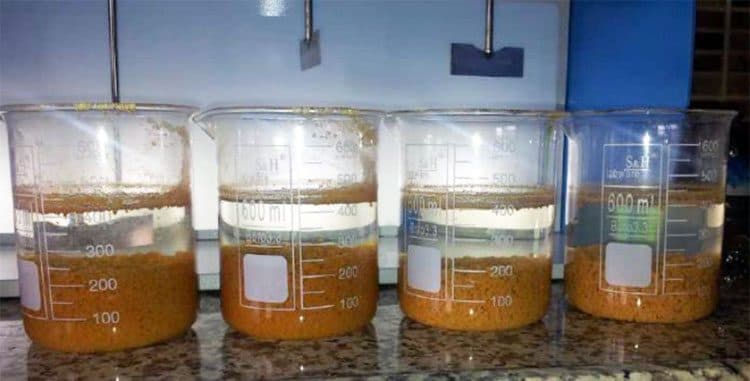
Four laboratory beakers of settled sludge on a gang stirrer during a formulation trial.
Formulation trials on the bench

02Benchmarked

We buy the competition, and test against it

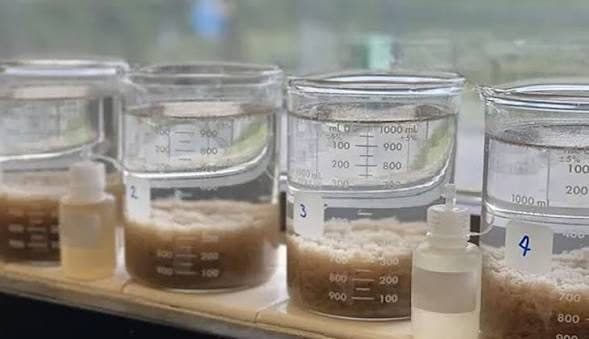
A claim is easy to make and hard to trust, so we buy the products operators are most often offered — at retail, like anyone else — and run ours against them on the same sludge, at the same dose basis, under the same conditions. We watch the measures that actually matter in a lagoon: how much of the volatile solids are digested, how well the sludge settles, and how far the blanket falls.

Where a competitor does something better, we would rather find it in a beaker than in your lagoon. The point is not a marketing chart; it is knowing where our blend genuinely helps and where it does not, so that what we tell you rests on a comparison rather than a brochure.

Four numbered laboratory beakers of settled sludge with dosing bottles, arranged as a comparison test.
Comparative jar tests — the same sludge, dosed several ways

03Across sludge types

Different sludge behaves differently

Bioaugmentation is not one problem. A municipal lagoon, a grease-loaded lift station and an industrial basin carry very different organic loads, and a blend that digests one will not necessarily touch another. So we test against a range of real sludge rather than a single convenient sample, and we treat the awkward results as the useful ones.

It also keeps us honest about the ceiling. Only the volatile, organic fraction of a sludge is treatable; grit, sand, silt and mineral solids do not respond to any organism at any dose. Part of what the testing establishes is how much of a given sludge is even ours to reduce — exactly what an operator needs to know before committing, and exactly what most suppliers leave out.

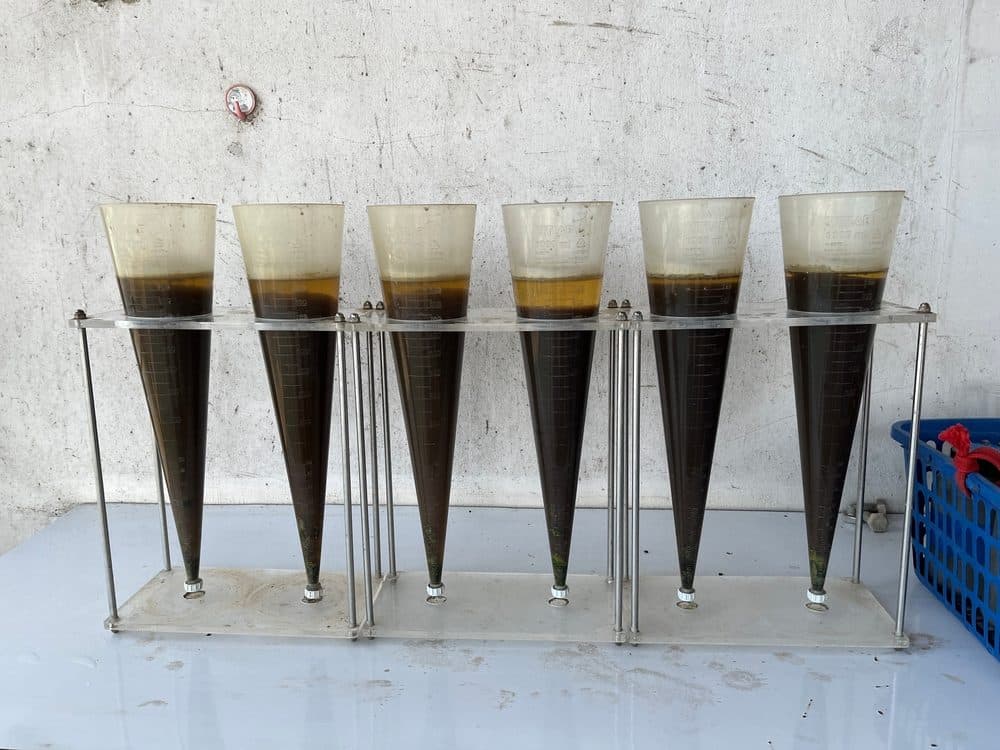
A rack of six Imhoff settling cones holding dark sludge samples settled to different volumes.
Settleability tests across several sludges in Imhoff cones

04Your sludge, assessed

Test it on your own sludge first

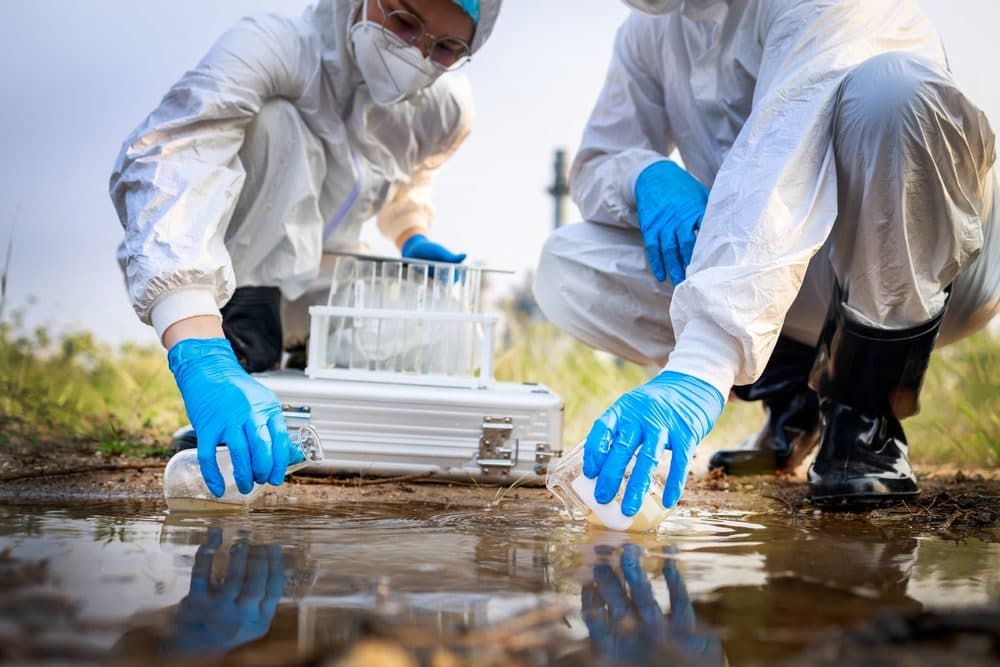
You do not have to take any of this on trust. This is not a site visit — you take a representative sample of your sludge and send it to us, and we characterise it in the lab: how much is volatile and treatable, how much is inert and never going to move. From that, and the published record, you get an evidence-based estimate of the reduction a correctly dosed programme could reach — grounded in your own sludge rather than a sales sheet.

If the honest answer is that your accumulation is mostly grit, or that mixing needs sorting out first, we will tell you before you spend anything — the same way we decline lagoons the planner flags as unsuitable. A product that will not work in your lagoon is not a sale we want.

An operator in protective coveralls and gloves collecting a representative sludge sample into a bottle at the edge of a wastewater lagoon.
The operator takes the sample; we do the testing