
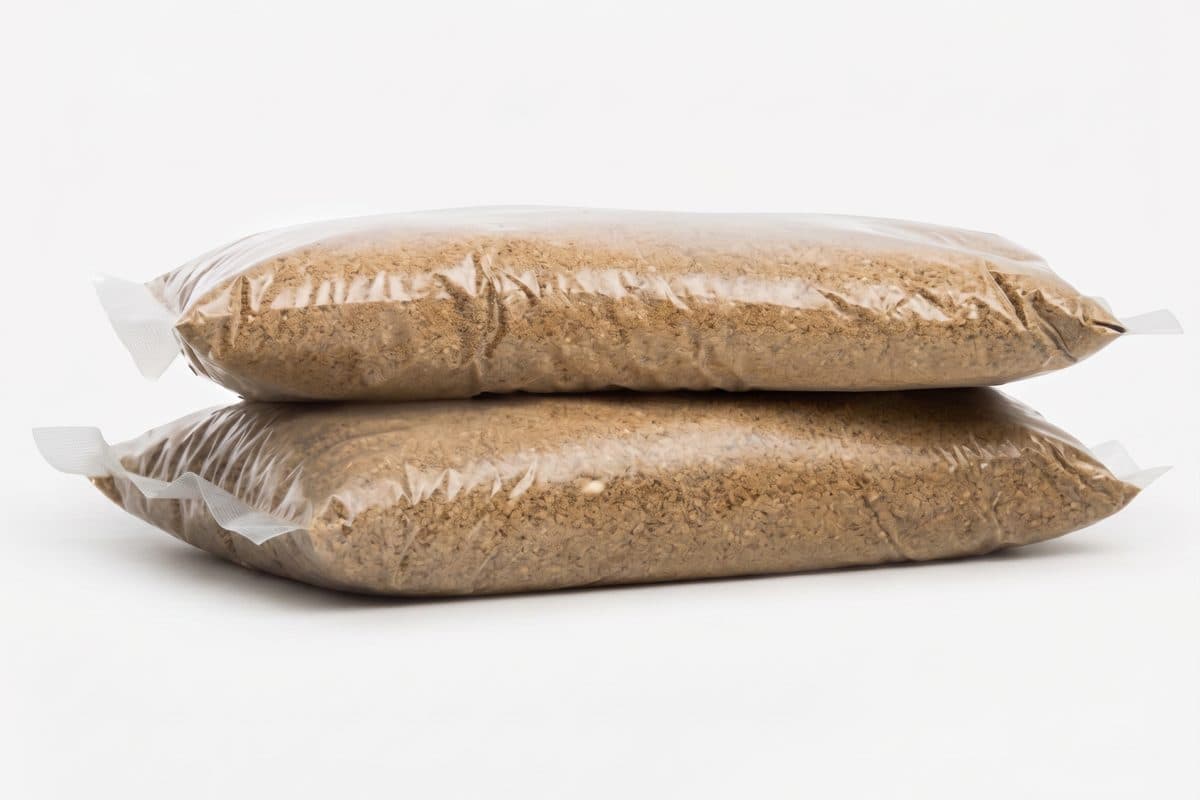
Dry water-soluble pouch
SediLogic Maintain
A soluble pouch for maintenance dosing and organic load in a well-mixed water column. For an established bottom sludge blanket, use a sinking solid.
$516
25 lb
25 lb pail containing 25 × 1 lb water-soluble pouches
25 lb
Added.View cart
Freight is added at checkout, and an order on a pallet is quoted before it ships. A person reads every order against the lagoon it is going to, and says so if the quantity looks wrong for the system.
01Why this format
Maintenance dosing and general organic load
Maintain disperses in the water column. It is intended for ongoing organic load, rather than direct delivery to settled bottom sludge.
It works in the water column, and it suits an adequately mixed lagoon.
02Specifications
Product specifications and documents
The specifications below come from product documents. If a document does not provide a value, we mark it as unpublished.
- Pack size
- 25 lb pail containing 25 × 1 lb water-soluble pouches
- Pack weight
- 25 lb
- Shipping weight
- 27.21 lbCalculated gross shipping weight, including a 1 kg packaging allowance.
- Pack price
- $516Indicative. Freight, tax and the final price are settled in the reviewed quote.
- Dose rate
- Sized to your lagoon from the manufacturer's dosing method (rev. 2026-07-16): an ongoing maintenance dose applied to the average flow across the programme, scaled to influent strength. The dosing planner returns the quantity and an indicative cost for your system.Concentration-based and system-specific rather than a fixed per-pail rate; sized to whole pails by the planner and confirmed in the reviewed quote.
- Storage
- Store dry and cool, away from direct sunlight; keep the container tightly closed.A temperature-controlled storage range of 50–90°F is specified on the product documentation.
03When not to buy this
When to consider another approach
- There is an established sludge blanket to reduce. That is what the sinking solid is for, and a pouch dosed at the surface is the wrong tool for it.
- The lagoon is poorly mixed, since dispersal through the water column is the entire mechanism and poor mixing removes it.
- An ammonia or nitrogen permit is the actual problem. Nitrifying bacteria do not survive drying, so no dry product can address nitrification.
The planner checks these conditions before calculating a quantity.
04Microbiology
How bacteria break down organic sludge
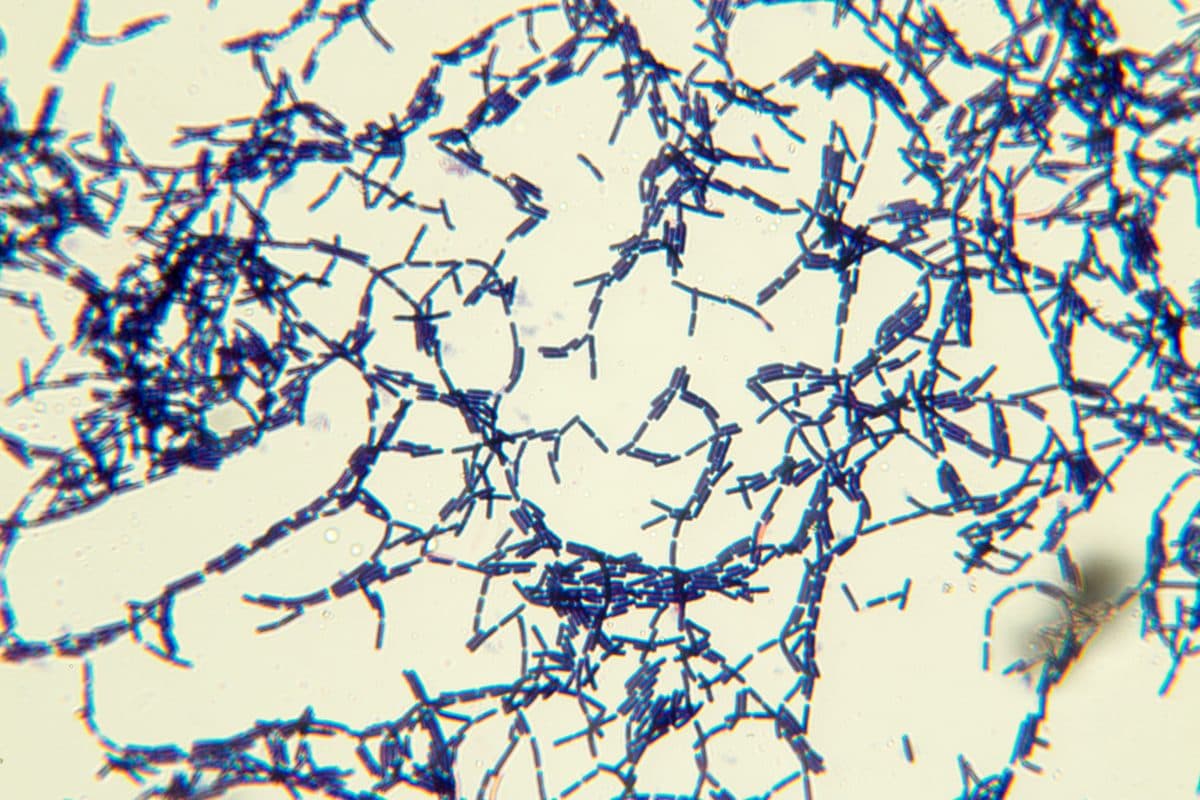
The mechanism is enzymatic hydrolysis. Bacillus species release enzymes that break large organic molecules into smaller, soluble fragments. Bacteria then take up and metabolise those fragments.
| Enzyme | Acts on | What that is, in a lagoon |
|---|---|---|
| Protease | Proteins and peptides | The protein fraction of settled influent solids and of dead biomass. |
| Lipase | Fats, oils and greases | FOG, which floats and consolidates rather than settling out on its own. |
| Amylase | Starches and complex carbohydrates | Carbohydrate load, typically heaviest on food-processing influent. |
| Cellulase | Cellulose | Plant fibre and paper, which is a large share of a municipal blanket. |
Why Bacillus works in dry treatments
Bacillus produces these enzymes and forms spores that tolerate drying and storage. The spores germinate when conditions are suitable. This makes Bacillus useful in dry sludge treatments. These products are not intended to address an ammonia permit; that requires a separate assessment of nitrification.
What the published work supports
Mixtures of protease, cellulase and lipase reduce total suspended solids by 30 to 50 per cent and improve settling, with protease and cellulase together outperforming either alone. One controlled study reported 33 per cent volatile suspended solids reduction.
These studies explain the mechanism; they do not predict results from a SediLogic product. The research is collected in the scientific literature.
05Microbiological specification
Product specifications
These figures come from the product documents. Values that the documents do not provide are marked as unpublished.
- Viable count at manufacture
- Not publishedNo viable count is published for this product.
- Guaranteed count at end of shelf life
- Not publishedNo guaranteed viable count at the end of the stated shelf life is published for this product.
- Strains in the blend
- Not publishedNo strain count is published for this product.
- Operating temperature range
- Apply at 50°F or warmerAn application threshold taken from the product label, not a full tolerance range.
- Operating pH range
- Not publishedNo numerical operating pH range is published for this product.
- Biosafety level
- Not publishedThe product documentation describes the bacteria as non-pathogenic but publishes no Biosafety Level designation.
- Shelf life
- Not publishedNo shelf life is published for this product.
The range
Other formats, and what each one is for
Choose the format according to where the material has accumulated and how you apply treatment. Sinking solids target settled bottom sludge. Soluble pouches and liquids disperse in the water column.
Same duty — Water column
- Sedivore PolarDry water-soluble pouch, cold-weather blendOrganic load in a lagoon running cold
- SediLogic Maintain ConcentrateHigh-concentrate soluble pouchGeneral organic load on large systems
- SediLogic Maintain PlusDry water-soluble pouch, high concentrationMaintenance dosing and general organic load
- Sedivore Polar PlusDry water-soluble pouch, high concentration, cold-weatherOrganic load in a lagoon running cold
Elsewhere in the range
- Sedivore SpikeDense sinking solidAccumulated organic bottom sludge
- Sedivore PuckDispersible sinking solidAccumulated organic bottom sludge
- SediLogic LiquidLiquid concentrateOrganic load in systems a solid cannot be dosed into
- SediLogic Liquid ColdLiquid concentrate, cold-weather blendOrganic load in liquid-dosed systems running cold
- SediLogic Liquid FOGLiquid concentrate, FOG-targetedFats, oils and grease, and the collection systems where they gather