
Mixing, aeration and bioaugmentation
Why every serious source treats mixing and aeration as complementary to biological treatment rather than as alternatives, and why a poorly mixed lagoon should be addressed before any product is dosed.
The short answer
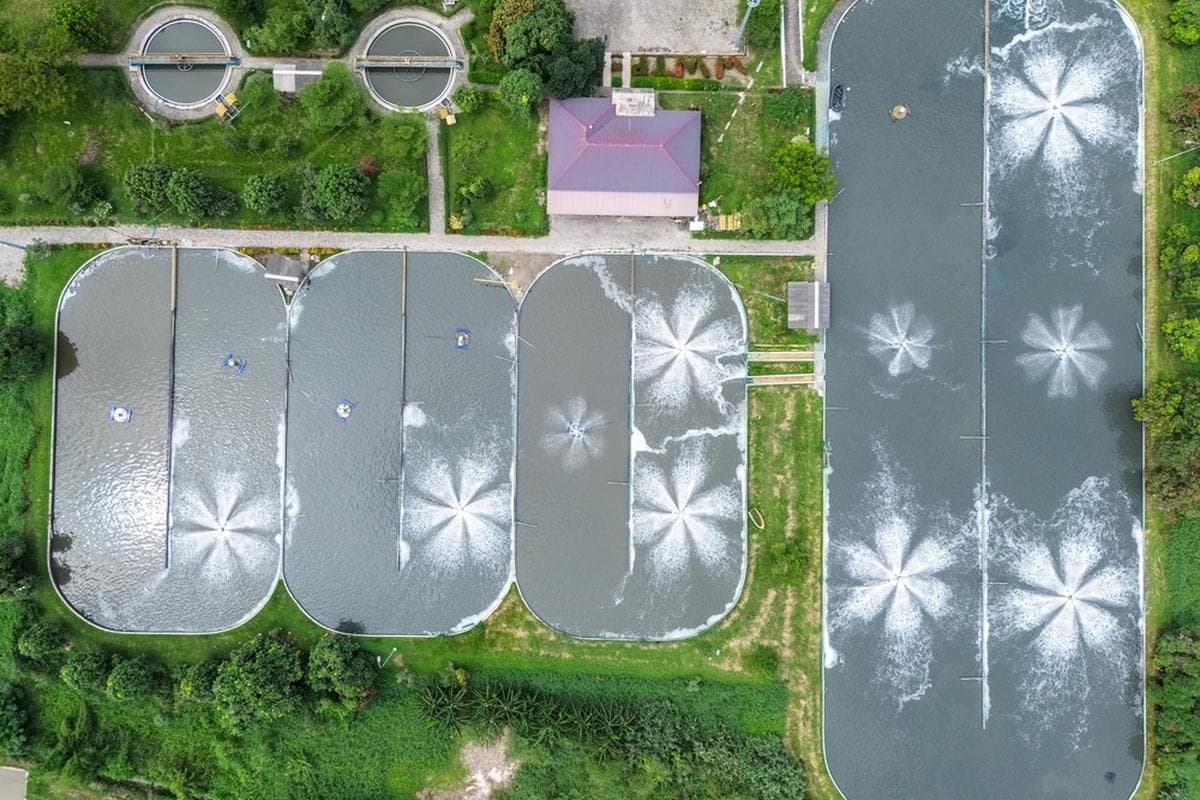
Mixing and aeration are not alternatives to bioaugmentation; every serious source, vendors included, treats them as complementary to it. The reason is oxygen: bulk digestion of organic solids is aerobic, so a stratified or poorly mixed lagoon has zones that are effectively inactive, and that limits what any biological programme can achieve no matter the dose. Unmixed water bodies also stratify, and density gradients limit the surface-to-bottom exchange that delivery depends on. The practical rule is to weigh mixing and dissolved oxygen alongside sludge volume and the treatable fraction, and to be willing to say a lagoon needs aeration before it needs biology. Mixing does not itself remove sludge, though, and it carries capital and power costs, so it is a precondition, not a cure.
Complementary, not alternative — and even the vendors agree
The sources reviewed here identify mixing as an important condition for lagoon treatment. Check circulation and oxygen availability before deciding whether to add a biological product.
Why oxygen is the gate
The mechanism is straightforward. Bulk digestion of organic solids is aerobic, so dissolved oxygen is the ceiling on how much work the organisms can do. A lagoon that is stratified or poorly mixed has whole zones that are effectively inactive — cold, still, oxygen-poor water where the biology barely turns over — and those zones limit the treatment directly. They also cap what any biological sludge programme can achieve, because a programme can only work where the conditions let the organisms function. Dose does not buy a way out of this: more product tipped into an anoxic zone is just more product sitting idle.
Stratification compounds the problem from the other direction. An unmixed water body separates into layers, and the density gradients between them limit the exchange of oxygen and suspended cells between the surface and the bottom. A lagoon that will not mix on its own is therefore working against both halves of the job at once: it starves the biology of oxygen, and it obstructs the delivery of freshly applied organisms down to the sludge blanket where they are needed. Mixing addresses both at the same time, which is part of why every serious source treats it as foundational rather than optional.
What this means before you buy
We do not perform on-site sludge surveys. We can test a representative sample you collect and send us. Include any survey figures you already hold with your dosing-plan request.
What mixing cannot do
Mixing and aeration support biological activity but do not physically remove the existing blanket. Consider their installation and running costs alongside sludge treatment and dredging. The practical sequence depends on the lagoon's condition and the amount of treatable organic material.
If the lagoon's conditions make treatment unsuitable, we will explain why before quoting.
Once suitability is established, the quantity comes from the manufacturer's written dose table for the product and application.
References
- Triplepoint Environmental. Lagoon sludge reduction and the mixing requirement. Triplepoint Environmental (lagoons.com).Vendor-publishedA vendor that nonetheless treats mixing as a precondition.
- US EPA. Lagoon Wastewater Treatment Systems. US Environmental Protection Agency.Regulator
- Peer-reviewed literature (PubMed Central). Critical review: free cells are vulnerable to washout, competition and protozoan predation. PubMed Central, PMC10056695.Peer-reviewed
Common questions
- Can bioaugmentation fix a poorly mixed lagoon?
- No. Bulk digestion of organic solids is aerobic, so a stratified or poorly mixed lagoon has zones that are effectively inactive, and no dose compensates for missing oxygen. Every serious source, vendors included, treats mixing and aeration as complementary to biological treatment rather than as alternatives to it. If mixing is the binding constraint, aeration comes before any product order.
- Does aeration remove lagoon sludge on its own?
- No. Mixing and aeration improve the conditions the biology needs and can slow fresh accumulation, but they do not by themselves remove the sludge already on the floor — that blanket still has to be digested biologically or dredged mechanically. Aeration also carries capital and ongoing power costs, so it is best understood as a precondition for treatment rather than a treatment in itself.
- Should mixing or dosing come first?
- Mixing, when it is the binding constraint. A lagoon that will not adequately mix cannot give the organisms the oxygen the digestion depends on, so aeration is the first fix and biology follows once the conditions allow it. This is why a good supplier will decline to quote biology for a lagoon that plainly needs aeration first, and why the dosing planner weighs mixing before it sizes anything.
Related reading
- DiagnosticWhy is my lagoon losing capacity?
- DeliveryGetting bacteria to the sludge blanket
- Evidence reviewDoes bioaugmentation actually work?
Products for this duty
Find out which product fits your lagoon.
Describe it and the planner selects a format — or tells you that biological treatment is the wrong answer for it. Nothing is captured.