
Dry water-soluble pouch, high concentration, cold-weather
Sedivore Polar Plus
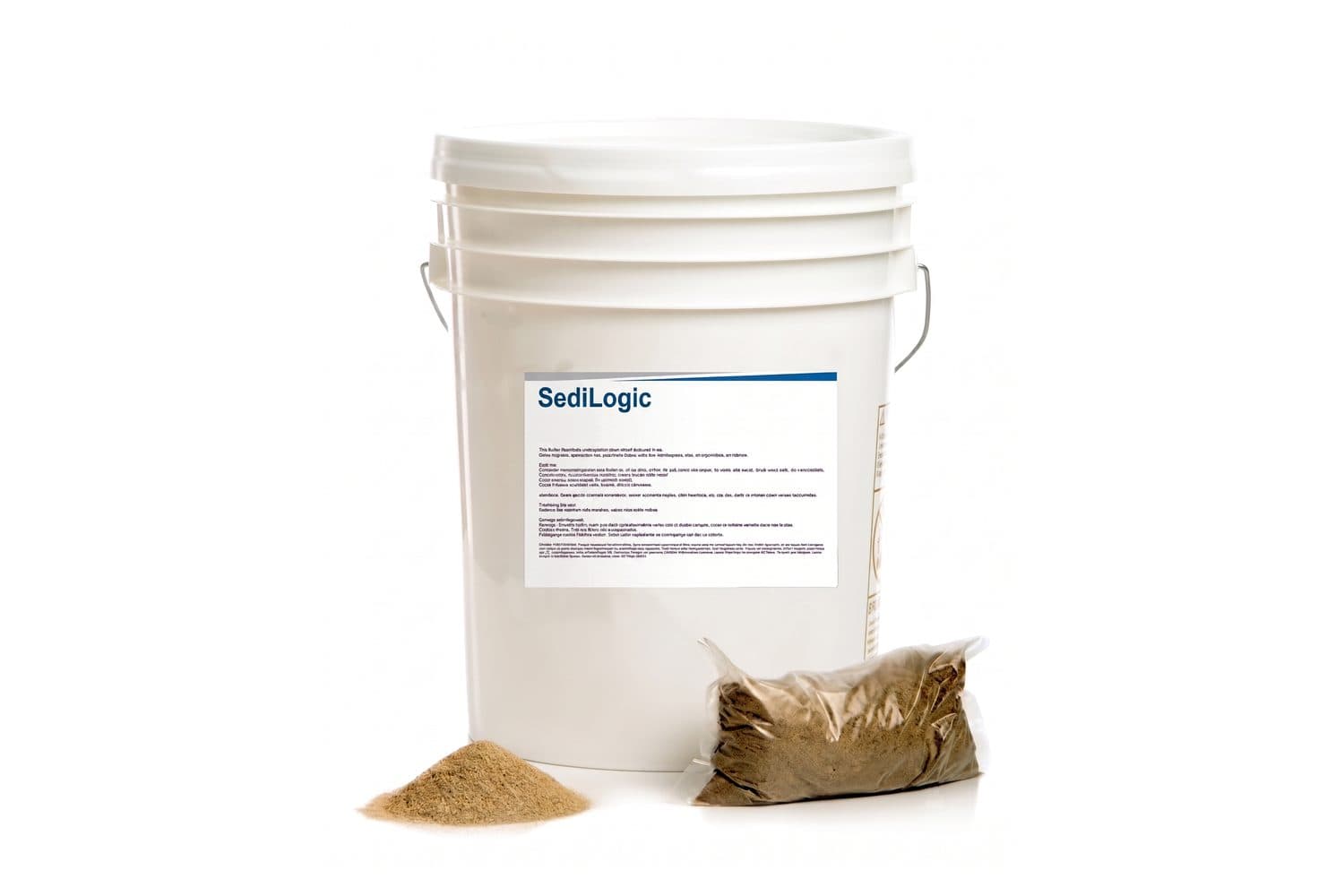
Sedivore Polar's duty at a much higher concentration, in the same dry water-soluble pouch. The cold-weather blend, with far more organisms in every pouch, for a lagoon that runs cold through a long enough season to make the pail count matter.
01Why this format
Organic load in a lagoon running cold
This is the narrowest product in the range, and deliberately so: it asks the buyer to be sure of two independent things. The water has to be genuinely cold, or the standard-temperature blend does the same work for less. And the programme has to be large enough that a pail count is worth reducing, because that is the only thing concentration buys — the organisms and the pouch are the same, and so is the ceiling on what they can digest. Where both hold, this is the least material to move for a cold-water programme. Where either does not, something else in the range is the better buy, and we would rather say so than sell up.
It works in the water column, and it suits a large or long cold-water programme where standard-strength pail counts add up.
02Specifications
What is published, and what is not.
Each figure below is taken from a product document. Where the documents publish no value, the row says so rather than carrying an estimate: a number that later moves is worse than a stated blank, because an operator may have sized an order around it.
- Pack size
- 10 kg (22 lb) pail of dry water-soluble pouchesThe pail is the specified pack. The number of pouches in it, and the weight of each, are not published.
- Pack weight
- 22 lbNet contents.
- Shipping weight
- 22.22 lbGross weight as shipped, including packaging.
- Pack price
- $4,326Indicative. Freight, tax and the final price are settled in the reviewed quote.
- Dose rate
- Not publishedNo dose method is published for this concentration, so no quantity is sized for it. A rate written for the standard-strength blend does not transfer to a stronger one, and the quantity is settled with a person rather than scaled.
- Storage
- Store dry and cool, away from direct sunlight; keep the container tightly closed.
03When not to buy this
When this product is the wrong answer.
- The water is not genuinely cold. A cold-weather blend earns its place only where low temperatures would otherwise stall the programme; above roughly 50°F the standard grade does the same work for less.
- The system is small enough that standard-strength pails are already a manageable count. Concentration earns its place on volume, and below that it is simply a larger unit to buy.
- There is an established sludge blanket to reduce. A blend dispersed through the water column is the wrong vehicle for material sitting several feet below it, and neither cold-weather selection nor concentration changes which vehicle reaches the blanket.
- An ammonia or nitrogen permit is the actual problem. Nitrifying bacteria do not survive drying, so no dry product can address nitrification, whatever its concentration.
The dosing planner screens for each of these and will say so rather than routing you to a quotation.
04Microbiology
What the organisms actually do to the material.
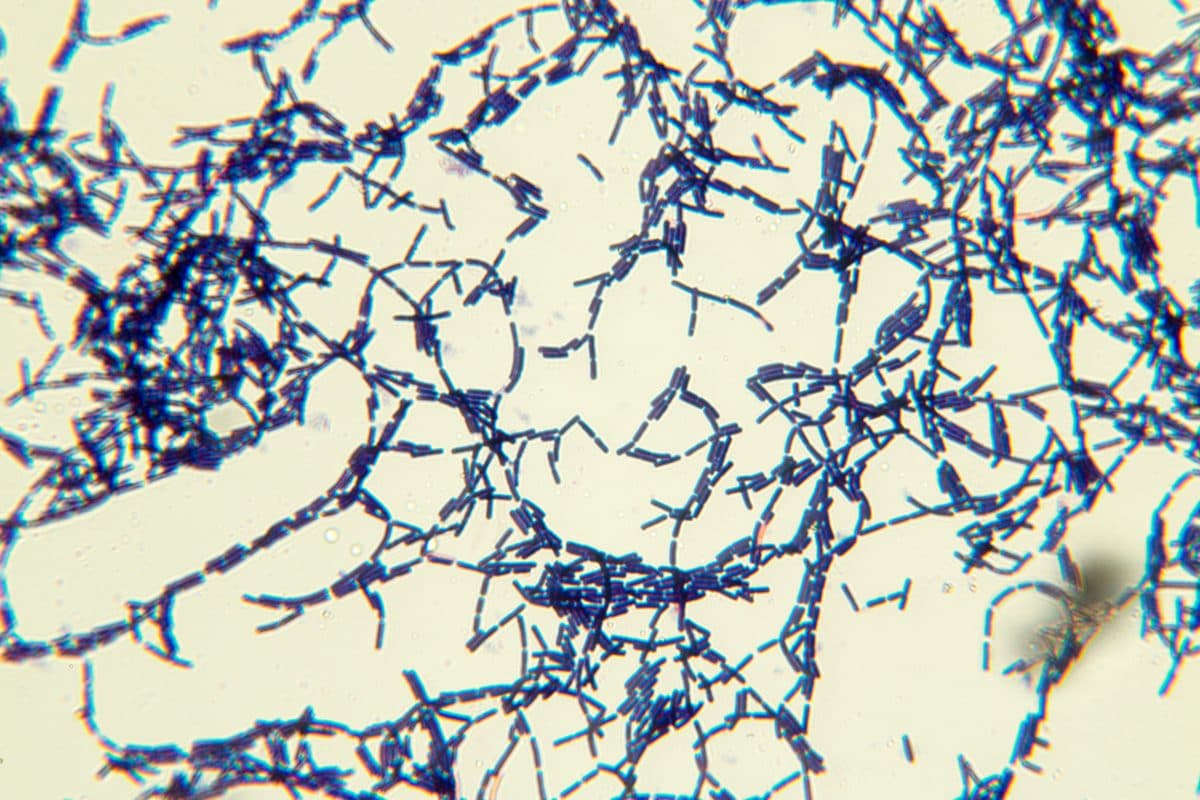
The mechanism is enzymatic hydrolysis. Bacillus species secrete enzymes into their surroundings that break large organic molecules into fragments small enough to be taken up and metabolised. The organisms are not consuming sludge directly; they are releasing the tools that take it apart.
| Enzyme | Acts on | What that is, in a lagoon |
|---|---|---|
| Protease | Proteins and peptides | The protein fraction of settled influent solids and of dead biomass. |
| Lipase | Fats, oils and greases | FOG, which floats and consolidates rather than settling out on its own. |
| Amylase | Starches and complex carbohydrates | Carbohydrate load, typically heaviest on food-processing influent. |
| Cellulase | Cellulose | Plant fibre and paper, which is a large share of a municipal blanket. |
Why Bacillus, and why a dry format costs nothing
Bacillus is the single most important bacterial source of exactly these enzymes, proteases in particular. It also forms endospores — a dormant state that survives drying, heat and time essentially intact, then germinates on contact with water and food. For this job the organisms that do the work are precisely the ones that dry best, which is why the two lead formats are dry and why that costs nothing biologically. Nitrifying organisms are the opposite case: they do not survive drying at all, which is why no dry product can address an ammonia permit.
What the published work supports
Mixtures of protease, cellulase and lipase reduce total suspended solids by 30 to 50 per cent and improve settling, with protease and cellulase together outperforming either alone. One controlled study reported 33 per cent volatile suspended solids reduction.
These figures are the mechanism, not a claim about this product: the peer-reviewed enzyme and hydrolysis work they rest on is collected in the scientific literature.
05Microbiological specification
The figures, and what each one is measured against.
Figures published in the product documents are shown here. Where the documents publish no numerical value, the row says so rather than carrying an estimate.
- Viable count at manufacture
- 50 billion CFU/gPer gram, at manufacture.
- Guaranteed count at end of shelf life
- Not publishedNo guaranteed viable count at the end of the stated shelf life is published for this product.
- Strains in the blend
- Multiple Bacillus strains; number not publishedThe count is withheld rather than estimated: the manufacturer publishes that there are several and not how many.
- Operating temperature range
- Specified for application below 50°FA selection threshold — the point below which this grade is the right choice rather than the standard pouch — and not a tested tolerance range. No numerical lower limit is published.
- Operating pH range
- Not publishedNo numerical operating pH range is published for this product.
- Biosafety level
- Not publishedNo Biosafety Level designation is published for this product.
- Shelf life
- Not publishedNo shelf life is published for this product.
The range
Other formats, and what each one is for
Which product fits is a question of where the material sits and how the system is dosed, not of which is stronger. Only a sinking solid reaches a settled blanket; a pouch or a liquid works on what the water column is carrying.
Same duty — Water column
- SediLogic MaintainDry water-soluble pouchMaintenance dosing and general organic load
- Sedivore PolarDry water-soluble pouch, cold-weather blendOrganic load in a lagoon running cold
- SediLogic Maintain ConcentrateHigh-concentrate soluble pouchGeneral organic load on large systems
- SediLogic Maintain PlusDry water-soluble pouch, high concentrationMaintenance dosing and general organic load
Elsewhere in the range
- Sedivore SpikeDense sinking solidAccumulated organic bottom sludge
- Sedivore PuckDispersible sinking solidAccumulated organic bottom sludge
- SediLogic LiquidLiquid concentrateOrganic load in systems a solid cannot be dosed into
- SediLogic Liquid ColdLiquid concentrate, cold-weather blendOrganic load in liquid-dosed systems running cold
- SediLogic Liquid FOGLiquid concentrate, FOG-targetedFats, oils and grease, and the collection systems where they gather