
Products
Format follows where the material sits.
A blanket under twelve feet of water and general organic load in the water column are different problems, and no single format addresses both well. Our blends are built to SediLogic's own specification, benchmarked against competing products and tested across sludge types. Dry is the specialty: four dry formats lead the range — two sinking solids and two soluble pouches, one of the pouches built for cold water — and all are dose-sized before they ship. A liquid line is supplied for the systems and loads that are dosed that way.
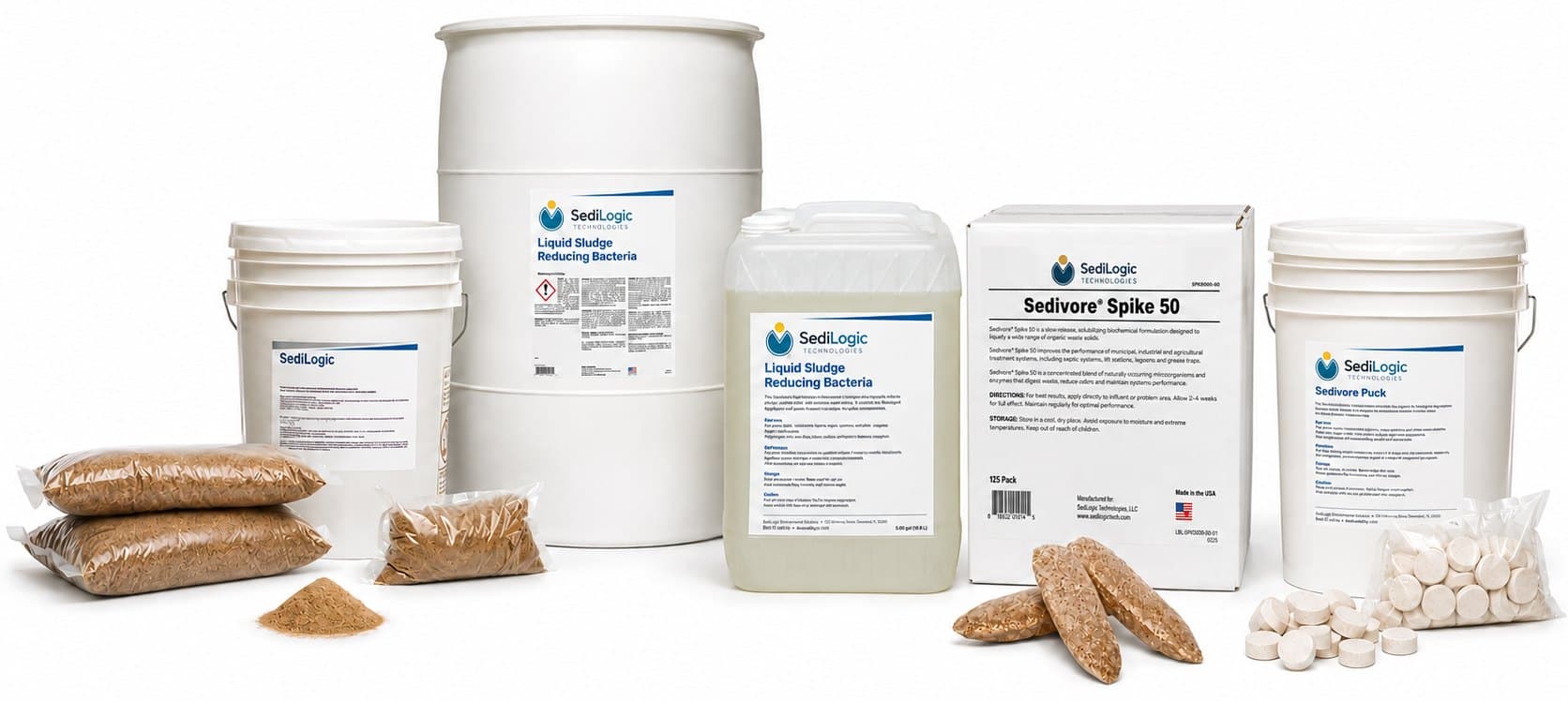
| Sedivore Spike | Sedivore Puck | SediLogic Maintain | Sedivore Polar | |
|---|---|---|---|---|
| Format | Dense sinking solid | Dispersible sinking solid | Dry water-soluble pouch | Dry water-soluble pouch, cold-weather blend |
| Target material | Accumulated organic bottom sludge | Accumulated organic bottom sludge | Maintenance dosing and general organic load | Organic load in a lagoon running cold |
| Where it works | Sludge interface | Sludge interface | Water column | Water column |
| Best fit | An established blanket under depth | A shallower blanket, or one spread across a wide area | An adequately mixed lagoon | An adequately mixed lagoon working through cold water |
| Pack | Case of approximately 125 sinking solids; each solid approximately 150 g (5 oz), 13.5 cm long by 4 cm across (5.3 × 1.6 in) | 22 lb (10 kg) pail of dispersible solidsThe pail is confirmed. The unit size within it is SediLogic's format specification and is not yet confirmed against the article quoted. | 25 lb pail containing 25 × 1 lb water-soluble pouches | 25 lb pail containing 25 × 1 lb water-soluble pouches |
| Quote basis | Lagoon-specific dose plan | Lagoon-specific dose plan | Lagoon-specific dose plan | Lagoon-specific dose plan |
| Price and ordering | $495 per pail22 lb 1 Added.View cart No dose table is published for this format, so we settle the quantity with you. | $632 per pail25 lb 1 Added.View cart No dose table is published for this format, so we settle the quantity with you. |
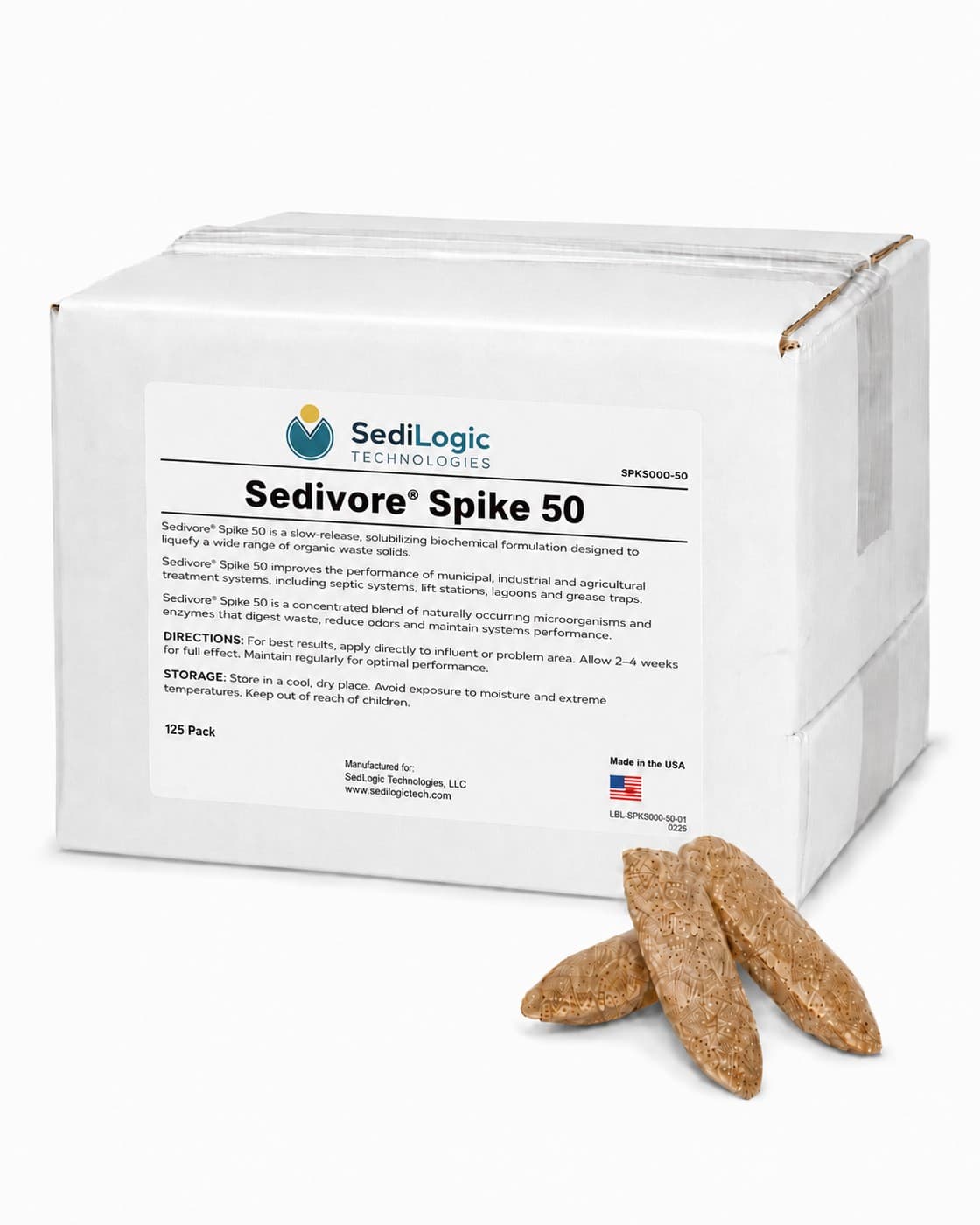
Sedivore Spike
Dense sinking solid
The volume product, and the denser of the two solids. Engineered to fall through the water column and release at or within the benthic sludge interface, rather than dissolving near the surface where the material it is meant to act on is not.
Only solids reach the benthic layer in any reliable way. A product dosed at the surface has to survive the trip down before it can do anything at all, and for an established blanket under several feet of water that trip is the whole problem. Mass and shape are what solve it: the spike is the format that carries furthest down and puts the organisms where the material is, which is why it leads on deeper cells.
Specifications, limitations and when not to buy it
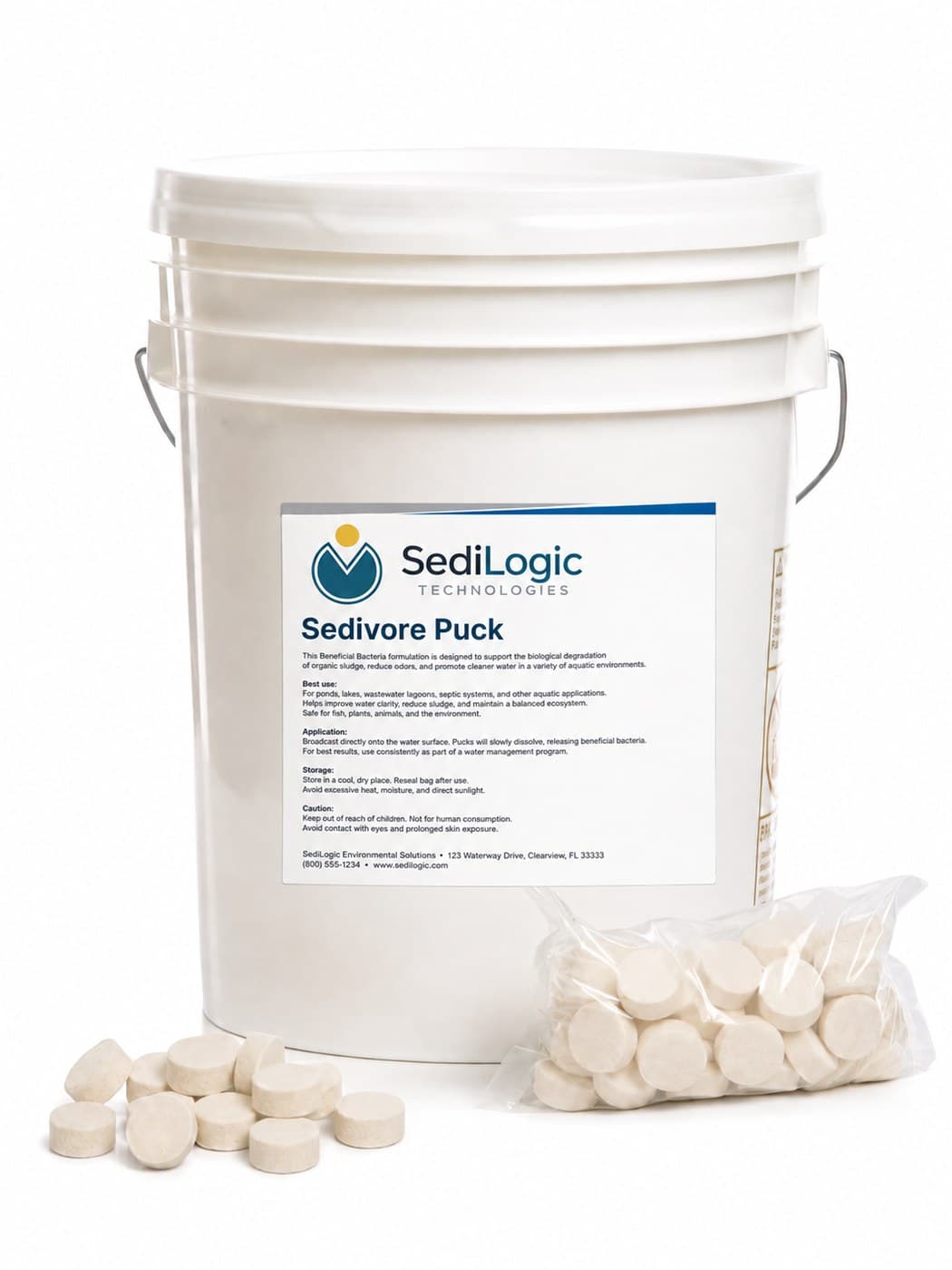
Sedivore Puck
Dispersible sinking solid
The same duty as the spike in a smaller unit. The format is specified in sizes from roughly 14 g to 170 g, selected against the dose, so a programme can be spread across a cell in many placements rather than concentrated in a few, and can be met without rounding well past it.
The two solids answer different halves of the same problem. A spike is chosen for penetration — mass carries it down through depth. A puck is chosen for distribution, and for arithmetic: a smaller unit spreads further across the bed, reaches the margins and the corners a heavier solid does not, can be applied from the bank by hand, and lets a calculated dose be met closely instead of overshot by a whole large unit. Neither is an upgrade on the other, and on most lagoons the honest answer is a combination.
Specifications, limitations and when not to buy it
$495
per pail22 lb
1Added.View cart
No dose table is published for this format, so we settle the quantity with you.
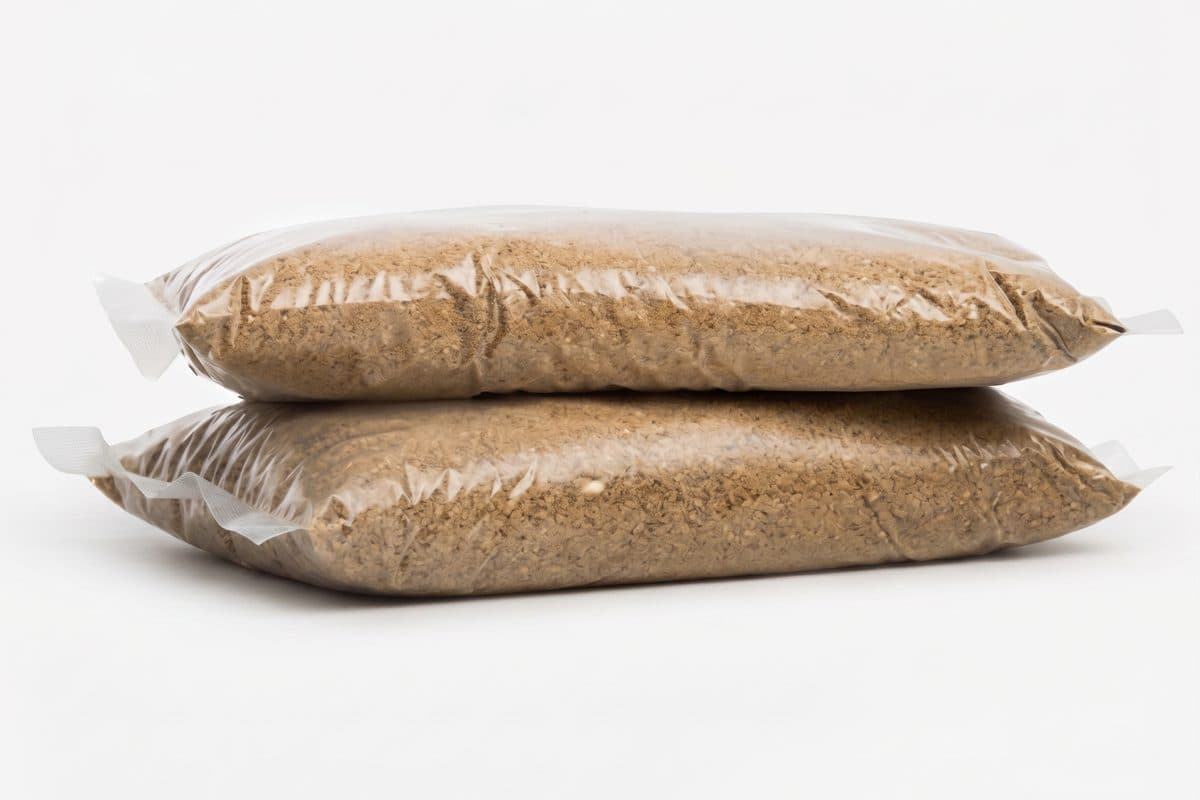
SediLogic Maintain
Dry water-soluble pouch
The same organism families targeted at the water column rather than at the blanket. Cheapest to ship and to stock, and the right choice for holding a position in a well-mixed system rather than for knocking down an established blanket.
Maintenance and knockdown are different jobs and the category routinely sells one as the other. A soluble pouch disperses through the water column, which is what you want for general organic load and what you do not want for material sitting several feet below it.
Specifications, limitations and when not to buy it
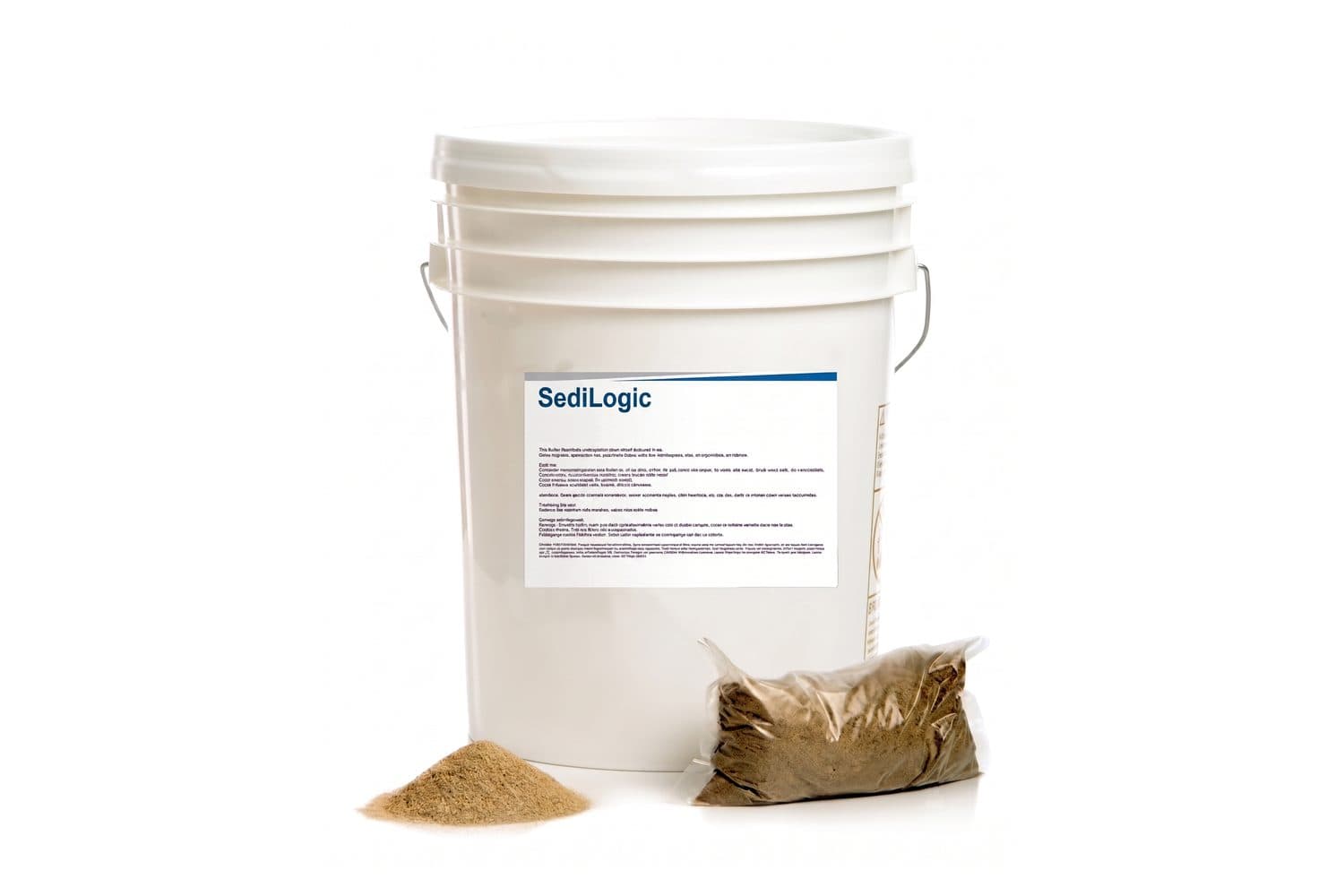
Sedivore Polar
Dry water-soluble pouch, cold-weather blend
SediLogic Maintain's duty, in a blend built for cold water. A soluble pouch that disperses through the water column and goes on digesting organic material at temperatures where a standard blend has effectively stopped — for a lagoon whose incoming load does not slow down simply because the water has.
Biological activity falls away as water cools, and most blends in this category are built on organisms that do very little below about 50°F. That is the ordinary reason a winter programme is a wasted one. This blend is selected for cold conditions instead, and it costs more: the same 25 lb pail is $632 here against $516 for the standard pouch, which is the plainest statement of the trade this product asks you to make. It is the narrower of the two pouches, deliberately — where the water is not genuinely cold, SediLogic Maintain does the same work for less, and where the target is a settled blanket a sinking solid is the right vehicle at any temperature.
Specifications, limitations and when not to buy it
$632
per pail25 lb
1Added.View cart
No dose table is published for this format, so we settle the quantity with you.
For large systems
SediLogic Maintain Concentrate
High-concentrate soluble pouch
SediLogic Maintain, concentrated. The same water-soluble pouch aimed at the water column, built to roughly ten times the standard concentration — so a large lagoon's programme arrives in a fraction of the pails to ship, store and handle.
On a big system a standard-strength programme runs to a lot of pails, and most of that weight is carrier rather than organisms. A concentrate delivers the same organisms in far less material. That is a freight-and-handling saving, not a stronger product: the lagoon still responds only to its volatile fraction, and that ceiling does not move with concentration. It does the water-column job — for an established benthic blanket the dense sinking solid is still the tool, at any concentration. Because it earns its place on volume, a concentrate order is confirmed with a person rather than sized in the planner.
Specifications and when not to buy SediLogic Maintain Concentrate
Maintain, or the concentrate?
The same water-column job and the same organisms — the concentrate is the standard pouch packed denser, so a large lagoon takes fewer of them. It is a handling decision on big systems, not a different treatment.
| SediLogic Maintain | SediLogic Maintain Concentrate | |
|---|---|---|
| Format | Dry water-soluble pouch | High-concentrate soluble pouch |
| Target material | Maintenance dosing and general organic load | General organic load on large systems |
| Where it works | Water column | Water column |
| Best fit | An adequately mixed lagoon | A large lagoon where standard pouch counts get unwieldy |
High concentration
The same blends, with far more organisms in every pouch.
Plus is a grade, not a different treatment. Both water-column blends are also made at 50 billion CFU/g and supplied in the same dry water-soluble pouch, in a 10 kg pail. Nothing else about them changes: the same organisms, dosed into the same place, doing the same work. A programme that would run to a stack of standard-strength pails arrives as a fraction of them.
What that buys is freight, storage and handling. Most of the mass of a standard-strength product is carrier rather than culture, and on a large system that is a great deal of weight shipped and stored for no treatment. What it does not buy is a stronger result. A lagoon responds only to its volatile fraction, and that ceiling does not move with concentration: grit, sand, silt and mineral precipitate remain at any strength. Nor does concentration change which vehicle reaches the bottom — a settled blanket is still the sinking solid’s job.
One consequence is worth stating plainly, because it is why neither of these appears in the planner. No dose method is published for either grade, and a rate written for the standard-strength blend does not transfer to a stronger one by arithmetic. So no quantity is sized here. It is settled with a person, against the lagoon it is going to.
SediLogic Maintain Plus
Dry water-soluble pouch, high concentration
SediLogic Maintain's duty at a much higher concentration, in the same dry water-soluble pouch. The same organisms aimed at the same place — organic load carried in the water column — with far more of them in every pouch, so a large or long programme arrives as fewer pails to freight, store and handle.
Concentration changes one thing: how much carrier you buy alongside the culture. Most of the mass of a standard-strength product is not the organisms, and on a big system that is a great deal of weight shipped, stored and handled for no treatment. This is the same blend with the ballast taken out, in the same pouch, dosed into the same place. It is not a stronger treatment and should not be bought as one — a lagoon responds only to its volatile fraction, and that ceiling does not move with concentration. Nor does concentration change which vehicle reaches the bottom: a settled blanket is still the sinking solid's job.
Specifications, limitations and when not to buy it
Sedivore Polar Plus
Dry water-soluble pouch, high concentration, cold-weather
Sedivore Polar's duty at a much higher concentration, in the same dry water-soluble pouch. The cold-weather blend, with far more organisms in every pouch, for a lagoon that runs cold through a long enough season to make the pail count matter.
This is the narrowest product in the range, and deliberately so: it asks the buyer to be sure of two independent things. The water has to be genuinely cold, or the standard-temperature blend does the same work for less. And the programme has to be large enough that a pail count is worth reducing, because that is the only thing concentration buys — the organisms and the pouch are the same, and so is the ceiling on what they can digest. Where both hold, this is the least material to move for a cold-water programme. Where either does not, something else in the range is the better buy, and we would rather say so than sell up.
Specifications, limitations and when not to buy it
Standard, or Plus?
Each pair is one blend at two strengths, in the same pouch. The concentration is the whole of the difference, and what it changes is how much material a programme takes rather than what the programme achieves. Whether you need a cold-weather grade is a separate question, and it is answered by the water temperature rather than by the size of the order.
| SediLogic Maintain | SediLogic Maintain Plus | Sedivore Polar | Sedivore Polar Plus | |
|---|---|---|---|---|
| Pack | 25 lb pail containing 25 × 1 lb water-soluble pouches | 10 kg (22 lb) pail of dry water-soluble pouchesThe pail is the specified pack. The number of pouches in it, and the weight of each, are not published. | 25 lb pail containing 25 × 1 lb water-soluble pouches | 10 kg (22 lb) pail of dry water-soluble pouchesThe pail is the specified pack. The number of pouches in it, and the weight of each, are not published. |
| Concentration | Not publishedNo viable count is published for this product. | 50 billion CFU/gPer gram, at manufacture. | Not publishedNo viable count is published for this product. | 50 billion CFU/gPer gram, at manufacture. |
| Best fit | An adequately mixed lagoon | A large or long programme where standard-strength pail counts add up | An adequately mixed lagoon working through cold water | A large or long cold-water programme where standard-strength pail counts add up |
No viable count is published for the standard grades, so the figure above is stated as a figure and not as a multiple of them. A ratio calculated against a number we do not print would be the same claim with a step hidden inside it.
01What we do not sell
A narrow range is a decision, not a limitation.
The range is short on purpose: no industrial high-load blend, and no own-label version of every duty a lagoon might present. A wider catalogue is easy to publish and hard to document and dose-confirm, and a product listed but not held is a lead time dressed up as a range. What is here is what we specify, benchmark and stand behind.
There is also no small trial pack. A trial sized to reduce purchasing friction rather than to treat the lagoon is an under-dose by design, and an under-dose produces a failure the operator will reasonably attribute to the product rather than to the quantity. Every order is sized against the lagoon it is going to.
Nitrification deserves its own note, because it is the most common thing we are asked for and cannot supply. Nitrifying bacteria do not survive drying, so no dry product can address an ammonia or total nitrogen permit — ours included. Any dry product sold for that purpose is being sold on a claim its format cannot support.
02The liquid line
Liquids, where a liquid is the right vehicle.
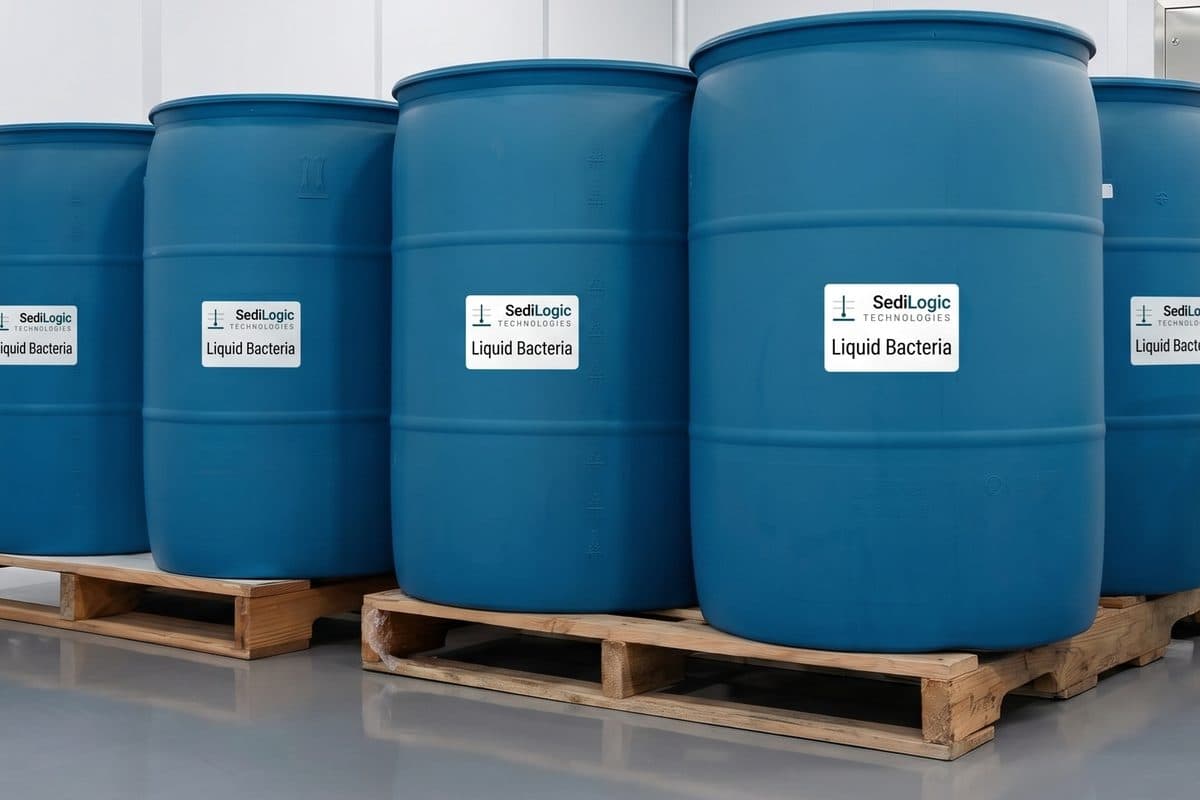
A liquid concentrate for systems that take a metered or poured dose rather than a solid one. It does the same job — digesting organic material — in a format that suits a dosing pump, a flowing channel or a confined structure, where a puck or a pouch would not work.
Format follows the duty. A dense solid is the only thing that puts organisms down onto a settled benthic blanket, so for an accumulated sludge blanket a solid is what we specify. A liquid disperses through the volume it is dosed into, which is the wrong behaviour for a blanket and the right one for organic load carried in the water — and it is the only format some installations can physically take at all. Where that is the duty in front of us, this is the product for it, built to the same specification as the dry range and benchmarked the same way.
The full liquid line
Three variants sit behind the format decision: the base concentrate, and two narrower blends for cases it does not cover. All three are built to our own specification and benchmarked the same way as the dry range. Which one fits — or whether a solid fits better — is settled when we review the order.
| SediLogic Liquid | SediLogic Liquid Cold | SediLogic Liquid FOG | |
|---|---|---|---|
| Format | Liquid concentrate | Liquid concentrate, cold-weather blend | Liquid concentrate, FOG-targeted |
| Target material | Organic load in systems a solid cannot be dosed into | Organic load in liquid-dosed systems running cold | Fats, oils and grease, and the collection systems where they gather |
| Where it works | Metered or poured, as the installation allows | Metered or poured, as the installation allows | Dosed into the collection system — trap, drain or wet well |
| Best fit | Dosing points and flowing systems that take a metered liquid | Liquid-dosed systems working through cold conditions | A grease-dominated load upstream of the lagoon, not the lagoon blanket |
Where the target is a settled bottom blanket and a solid can be dosed onto it, a solid is what we will quote. That is a question of which vehicle reaches the material, not of which product is better.
03Getting started
Start with a dosing plan. It is free, it is built for your lagoon, and it commits you to nothing.
The plan is the useful first step, and it costs nothing. It runs in your browser, keeps nothing until you have seen the result, and if biological treatment is the wrong answer for your lagoon it will tell you so — before you have spent anything. There is no contract to obtain it and none to walk away from.
When you order from a plan, the quantity is sized to your lagoon from the manufacturer’s written dose table and rounded up to whole packs — so what you buy is what the lagoon needs to respond, not a round number off a shelf. Too small an order is the expensive mistake in this category, because it reads as a product that does not work and ends up bought twice. Sizing every plan against the lagoon it is going to is how we keep you from paying for that.
Maintenance dosing is a repeat, scheduled purchase, and it is priced as one: operators who stay on a maintenance schedule hold a standing 5% repeat-supply discount rather than paying one-off retail each time. The relationship is what earns the better price, not a commitment you have to sign up front.