Skip to content
SediLogic Technologies

Wastewater lagoons

Three village lagoons, Michigan

Three lagoons at one works, all carrying enough accumulated material to put dredging on the capital plan.

40–91%

reduction across the three lagoons in one year

Field result
Duty
Wastewater lagoons
Sector
Municipal
Treatment window
1 year
What was counted
Sludge depth and solids
  • Lagoon 1: 1.27 ft removed, 40 per cent
  • Lagoon 2: 0.52 ft removed, 61 per cent
  • Lagoon 3: 0.16 ft removed, 91 per cent
  • Before-and-after sludge maps recorded for all three
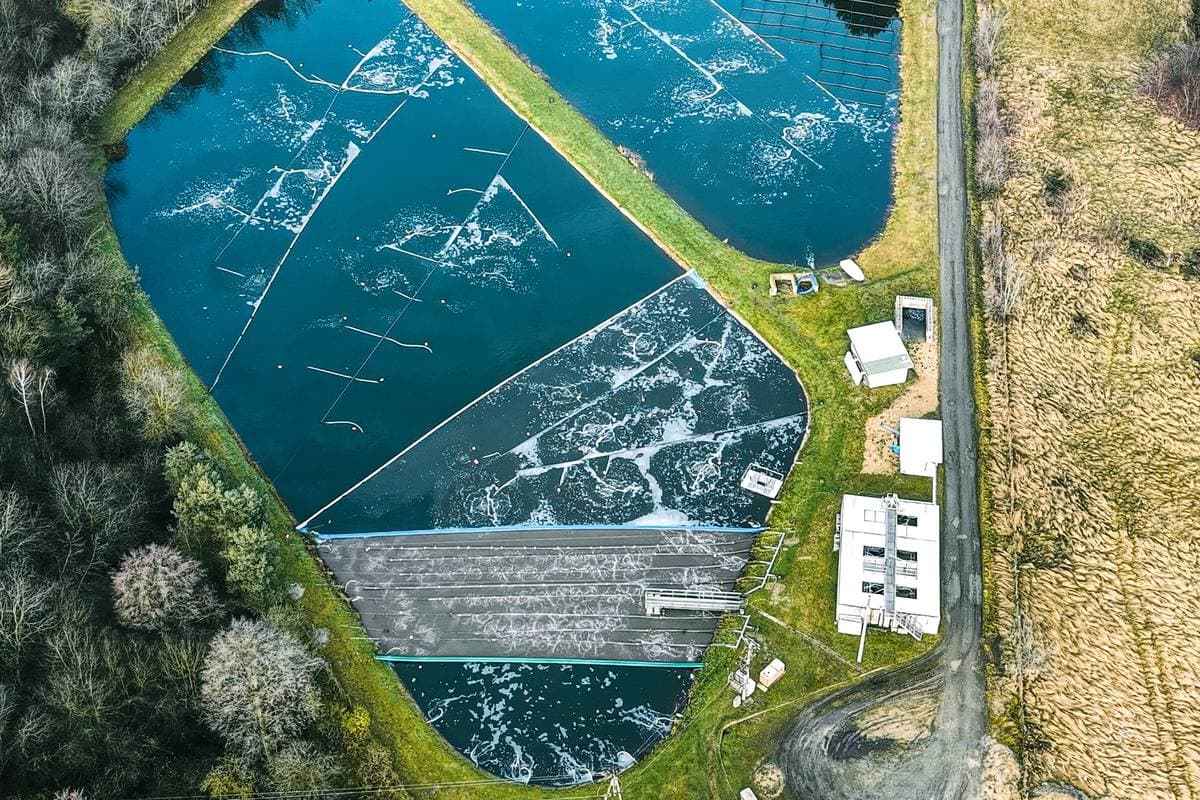
Aerial view of a multi-cell aerated wastewater lagoon, its surface broken by aeration, with grass berms dividing the cells and a small control building alongside.
Illustration — an operating aerated lagoon, not the works described on this page.

01The plant

What was being treated

Three wastewater lagoons at one village works in Michigan's agricultural belt.

02Before

How the material got there

All three had accumulated enough material on their floors for dredging to have reached the village's capital plan, which is the point at which a lagoon works stops being the cheap way to treat wastewater.

03Treatment

What was applied, and how

A programme run across all three lagoons over a year, with the object of taking the accumulated volume down far enough to defer the dredging rather than cancel it.

Every result in this library was measured at an operating plant treating with one of the formulations SediLogic supplies, over the window stated above. It is a field result published as reported, not a controlled trial we ran.

04Method

How the result was established

Sludge maps of each lagoon made before the programme and again at the end of the year, so each of the three has its own before-and-after rather than a works-wide figure.

05Outcome

What followed

Dredging deferred at all three lagoons.

06Limits

What this record does not establish.

The spread is the thing to read here, and the record does not explain it: forty per cent at one lagoon and ninety-one at another, in the same year, at the same works, under the same programme. Three cells fed by one village should not behave that differently unless what was on their floors was different to begin with, and no volatile fraction is published for any of them. Nothing was left untreated, no dates or water temperatures are given, and the maps are stated to exist rather than described. A number at the top of that range is not what a fourth lagoon should expect.

Only the volatile organic fraction of a sludge responds to any of this. Grit, sand, silt, mineral precipitates and plastics remain at any dose, here and everywhere else.

What we would supply

For this duty, in our range.

Spike and Puck are sinking solids for bottom sludge. Maintain is a soluble pouch for organic load in the water column, with Polar for cold-water conditions. The planner calculates quantities only for products with a written dose method; Puck and Polar need a separate review.

Use the written dose method for your product and lagoon. A quantity reported in a case study was chosen for that site and should not be used as your application rate.

Read next

The same duty, measured somewhere else.

  • Wastewater lagoons

    Barbourville, Kentucky

    Municipal24 weeks

    43.3%

    of accumulated solids digested

    Field result

    Just over five feet of accumulated solids in the primary aerated lagoon, assessed at 2,365 dry tons. The plant wanted a route that did not involve dredging.

    • 1,025 dry tons removed
    • Average depth 5.08 ft to 2.65 ft
    Sludge depth and solids
  • Wastewater lagoons

    Inkom, Idaho

    MunicipalFive months, May to October

    48%

    reduction in solids volume overall

    Field result

    Accumulated solids across two lagoon cells, against a specification calling for a 50 per cent reduction. The treatment window was bounded by water temperature, which has to stay above roughly 55°F for the organisms to work at all.

    • Cell 1: 75.2 per cent
    • Cell 2: 37.5 per cent
    Sludge depth and solids
  • Wastewater lagoons

    Municipal WWTP, United States

    Municipal3 months

    672,659lb

    of organic solids digested

    Field result

    Decades of loading had taken the lagoon to a measured 20.5 per cent solids, with a dredging quotation in hand and no budget line to meet it.

    • Dredging deferred, not ruled out
    • A 4.5x cost saving against the dredging quotation
    Sludge depth and solids

All field results

Your lagoon next

This was measured somewhere else.

This result came from a different plant. Your sludge composition and operating conditions need their own assessment. Send us your lagoon details for a dosing review; do not use the quantity on this page as your application rate.