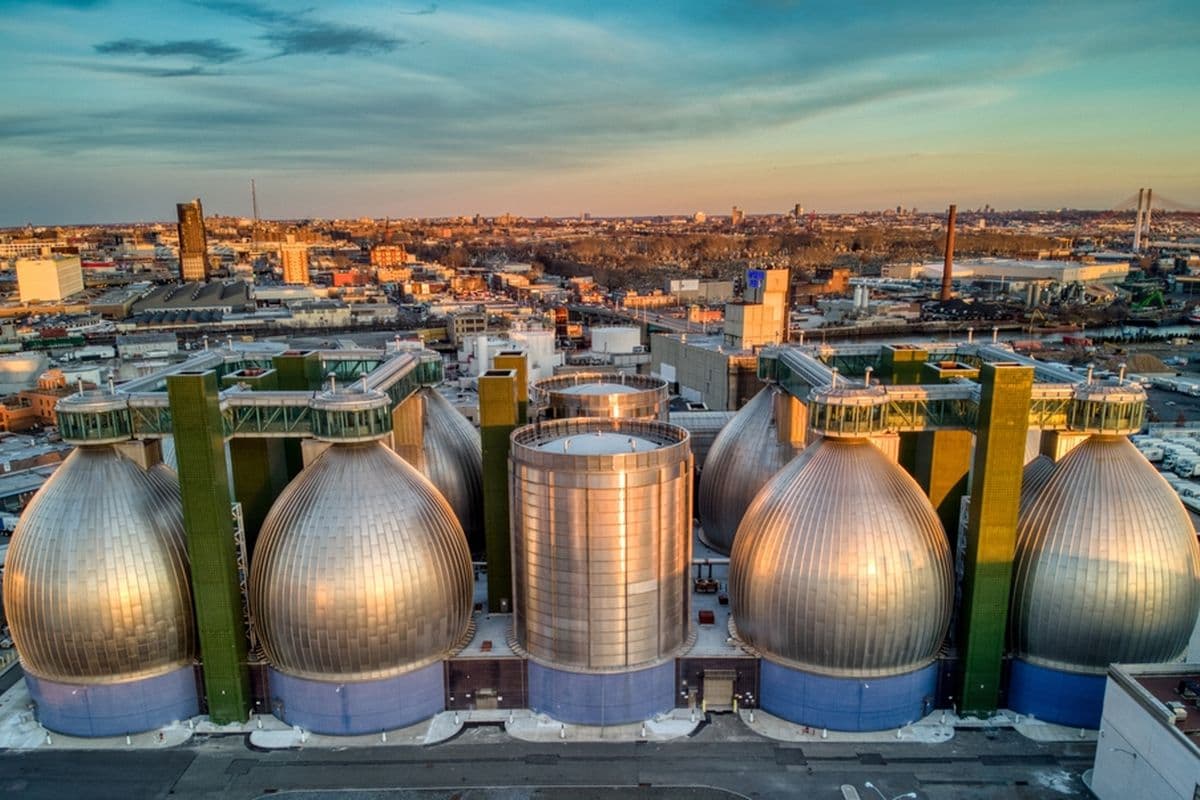
Anaerobic digesters
Slaughterhouse digester
Industrial1 month
more biogas
High-strength waste going into a digester that was converting less of it to gas than the plant's generating set could use.
- 51 per cent higher power generation
Anaerobic digesters
A digester returning less gas than the organic load going into it suggested it should.
increase in biogas yield

01The plant
The anaerobic internal-circulation reactor of a plant making French fries and potato flake, treating 2,800 m³ a day (0.74 MGD) of starchy wastewater at about 4,000 mg/L chemical oxygen demand. The gas it makes fuels the site's boilers.
02Before
The reactor worked. The operators simply believed more of the organic load going into it should be leaving as gas than was — every cubic metre not converted is boiler fuel bought instead of made, and load passed downstream to the aerobic stage to be dealt with there at the cost of aeration power.
03Treatment
A blend of anaerobic organisms and enzymes added to the anaerobic unit and run for ninety days.
Every result in this library was measured at an operating plant treating with one of the formulations SediLogic supplies, over the window stated above. It is a field result published as reported, not a controlled trial we ran.
04Method
Biogas production, biogas yield per kilogram of COD removed, and COD removal across the anaerobic unit — the same reactor measured with the addition and without it.
05Outcome
More of the load converted anaerobically meant less of it arriving at the aerobic stage, so aeration demand fell as the gas rose. Floating grease in the anaerobic unit reduced alongside.
At the start
2,389 m³ of biogas a day, a yield of 0.34 m³ per kg of COD removed, and 38 per cent COD removal across the unit.
At the close
4,435 m³ a day, a yield of 0.72 m³ per kg of COD removed, and 53 per cent COD removal.
06Limits
The comparison is one reactor before and after, not two reactors side by side, and a food factory's wastewater strength moves with its production schedule — nothing here holds the feed constant or reports what it did across the window. No plant is named. Digesters are not a duty SediLogic sizes; this is published because it belongs to the field record for these organisms, not because there is an offer behind it.
Only the volatile organic fraction of a sludge responds to any of this. Grit, sand, silt, mineral precipitates and plastics remain at any dose, here and everywhere else.

—What we would supply
Nothing in the range is specified for an anaerobic digester. The dry and liquid articles SediLogic supplies are aerobic and facultative blends built for lagoons, collection systems and flowing pre-treatment, and a digester is a different vessel working a different way.
This record is here because the biology has been measured doing that work, not because there is an article behind it. If a digester is your problem, say so and we will tell you plainly whether we have anything for it — today the answer is that we do not.
—Read next
Anaerobic digesters
Industrial1 month
more biogas
High-strength waste going into a digester that was converting less of it to gas than the plant's generating set could use.
Wastewater lagoons
Municipal24 weeks
of accumulated solids digested
Just over five feet of accumulated solids in the primary aerated lagoon, assessed at 2,365 dry tons. The plant wanted a route that did not involve dredging.
Wastewater lagoons
MunicipalFive months, May to October
reduction in solids volume overall
Accumulated solids across two lagoon cells, against a specification calling for a 50 per cent reduction. The treatment window was bounded by water temperature, which has to stay above roughly 55°F for the organisms to work at all.
Your lagoon next
A different plant, a different loading and a different sludge. What decides your result is how much of your own accumulation is organic and treatable, and whether the dose is sized against the lagoon in front of us rather than read off this page. Tell us the dimensions and we will size it.