
Skip to content
SediLogic Technologies

Aeration basins

Distillery aeration tank, Mexico

Accumulated solids standing more than a metre deep in the aeration tank of a distillery effluent plant.

1m

of accumulated tank solids digested in fourteen days

Field result
Duty
Aeration basins
Sector
Industrial
Treatment window
14 days
What was counted
Sludge depth and solids
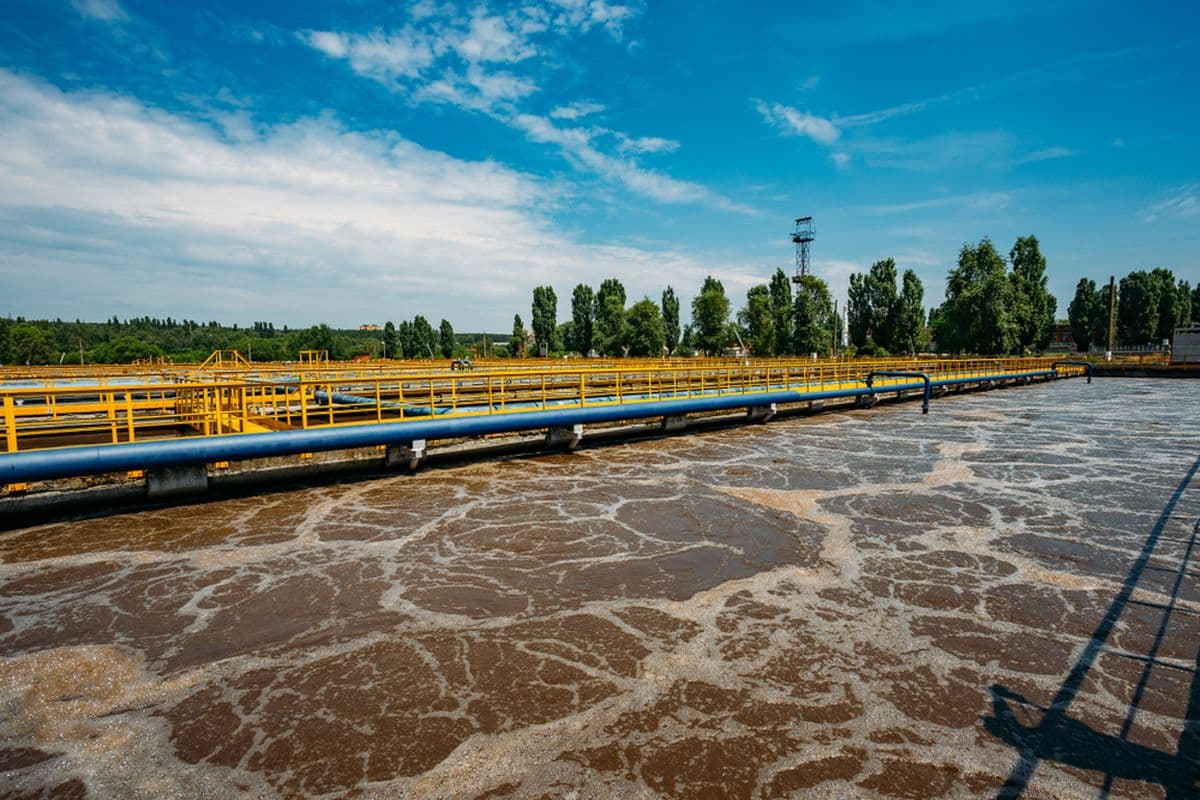
Aeration basin with surface turbulence from diffused air.
Illustration — an aeration basin under diffused air, not the plant described on this page.

01The plant

What was being treated

The aeration tank of a distillery effluent works in Mexico treating raw vinaza — the high-strength wastewater left behind when agave is fermented and distilled.

02Before

How the material got there

The organic load had overwhelmed the tank. Accumulated solids stood more than a metre deep across the bottom, a thick scum layer had closed the surface, and with oxygen transfer choked the treatment slowed further still. As capacity fell the aerators worked harder and the electricity bill climbed with them. The operator wanted the tank back without draining it, dredging it or buying anything.

03Treatment

What was applied, and how

A powder metered into the aeration tank inlet once a day, so the dosing rode the flow that was already there. No capital work, no new tanks and no change to the aeration hardware.

Every result in this library was measured at an operating plant treating with one of the formulations SediLogic supplies, over the window stated above. It is a field result published as reported, not a controlled trial we ran.

04Sizing

What the quantity was set against

Once daily at the tank inlet, carried in on the existing flow. Frequency is the only basis the record gives; no quantity is published and none is inferred here.

05Method

How the result was established

The tank's water level, the state of the surface and oxygen transfer, observed across fourteen days.

06Outcome

What followed

Treatment capacity recovered, and the aerators drew less power as the load on them eased.

At the start

More than a metre of accumulated solids across the tank bottom, a thick scum layer over the surface, oxygen transfer restricted.

At the close

Scum almost entirely gone by day fourteen, oxygen transfer restored, and the tank level down by more than a metre.

07Limits

What this record does not establish.

The metre is inferred, not measured. What was observed is the tank's water level falling by more than a metre, read as that much accumulated material consumed in place — there was no depth survey, no solids analysis and no volatile fraction at either end. A level drop in an operating tank has other possible contributions and the record excludes none of them. Nothing was left untreated, and fourteen days is a short window to attribute a metre to.

Only the volatile organic fraction of a sludge responds to any of this. Grit, sand, silt, mineral precipitates and plastics remain at any dose, here and everywhere else.

What we would supply

For this duty, in our range.

SediLogic Liquid is the article in the range that reaches this — a concentrate for systems that take a metered or poured dose rather than a solid one, which is what a basin under continuous flow is. Nothing in the dry range is the right vehicle for mixed liquor: a sinking solid is built to leave the water column, and mixed liquor is the water column.

SediLogic holds a written dose table for wastewater lagoons and for no other duty, so the planner will not size a basin. A quantity for one is settled with a person against your flow and your loading.

Read next

The same duty, measured somewhere else.

  • Aeration basins

    Containerboard mill, two 14 MG aeration lagoons and a 3 MG polishing lagoon

    IndustrialOne month from a January application

    60%

    lower effluent BOD within a month of dosing

    Field result

    A million gallons a day of mill effluent, and a BOD figure that climbed every winter as the water cooled and biological activity fell away with it.

    • Applied in January, at the coldest point of the year
    BOD and COD
  • Aeration basins

    Dairy processing plant, 1.9 MGD

    IndustrialImprovement inside 4 months

    $40,000

    reported annual saving once settling recovered

    Field resultNo method stated

    Nine months of filamentous growth had taken the settled-volume test above 980 ml/L, so the clarifier could not hold solids and the plant was paying to haul them away.

    • $110 a day of disposal cost avoided
    • Influent BOD around 500 mg/L on 7,192 m³/day
    • No closing settled-volume figure was recorded
    Settling
  • Aeration basins

    Municipal activated sludge plant, 5 MGD

    Municipal1 year

    20%

    reduction in secondary sludge production

    Field result

    A food-processing load arriving at a municipal works, bringing enough grease with it to drive filamentous growth and cost the plant its settling.

    • Effluent TSS 12–16 ppm to under 5 ppm
    • Polymer use halved
    • 1,500 cubic feet of accumulated grease digested inside two months
    • Sludge cake 25 per cent drier
    Fats, oils and greaseSludge depth and solidsSuspended solidsSettling

All field results

Your lagoon next

This was measured somewhere else.

A different plant, a different loading and a different sludge. What decides your result is how much of your own accumulation is organic and treatable, and whether the dose is sized against the lagoon in front of us rather than read off this page. Tell us the dimensions and we will size it.