
Concentrado líquido
SediLogic Liquid
Un concentrado líquido para sistemas que admiten una dosis medida o vertida en lugar de una sólida. Hace el mismo trabajo — digerir materia orgánica — en un formato que se adapta a una bomba dosificadora, a un canal en circulación o a una estructura confinada, allí donde un disco o una bolsa no funcionarían.
01¿Por qué este formato?
Carga orgánica en sistemas en los que no puede dosificarse un sólido
El formato sigue al cometido. Un sólido denso es lo único que deposita organismos sobre una manta bentónica asentada, de modo que para una manta de lodo acumulada lo que especificamos es un sólido. Un líquido se dispersa por el volumen en el que se dosifica, lo que es el comportamiento equivocado para una manta y el acertado para una carga orgánica transportada en el agua — y es el único formato que algunas instalaciones pueden admitir físicamente. Cuando ese es el cometido que tenemos delante, este es el producto para él, fabricado según la misma especificación que la gama seca y comparado del mismo modo.
Funciona en el dosificado o vertido, según lo permita la instalación., y conviene puntos de dosificación y sistemas en circulación que admiten un líquido medido.
02Especificaciones
Especificaciones y documentos del producto
Cada cifra siguiente procede de un documento de producto. Cuando los documentos no publican ningún valor, la fila lo indica en lugar de llevar una estimación: un número que luego se mueve es peor que un blanco declarado, porque un operador puede haber dimensionado un pedido en torno a él.
- Formato del envase
- Cubo de 5 gal (19 l)
- Peso del paquete
- No publicadoSe vende por volumen y no por peso.
- Peso de envío
- 43.94 lbCalculado a partir del peso del agua más un margen de 1 kg para el embalaje.
- Precio del paquete
- $460Indicativo. El transporte, los impuestos y el precio final se fijan en el presupuesto revisado.
- tasa de dosis
- No publicadoNo se publica ningún método de dosificación con control de revisión para este formato, por lo que no se dimensiona ninguna cantidad.
- Almacenamiento
- Almacenar en un lugar fresco y seco, lejos de la luz solar directa; mantener el contenedor cerrado.
03Cuando no comprar esto
Cuándo considerar otro enfoque
- Su objetivo es la manta de fondo y puede dosificarse un sólido. Un sólido que se hunde lleva los organismos hasta el material; ese es el cometido para el que está hecha la gama seca, y es lo que cotizaremos para él.
- El objetivo es una capa de lodo bentónico acumulado. Un líquido introducido en la superficie se dispersa a través de la columna de agua en lugar de concentrarse donde se asienta la capa de lodos, que es la única razón por la que existe el sólido que se hunde.
- Lo está comprando para cumplir con un permiso de amoníaco o nitrógeno total. La nitrificación requiere organismos nitrificantes viables, y si esta mezcla los contiene o no es una cuestión que corresponde a las especificaciones escritas del fabricante; no está establecido aquí y no lo daremos a entender.
El planificador de dosificación comprueba cada uno de estos casos y se lo indicará en lugar de dirigirle a una cotización.
04microbiología
Lo que realmente le hacen los organismos al material.
El mecanismo es la hidrólisis enzimática. Bacillus Las especies secretan enzimas en su entorno que rompen las moléculas orgánicas grandes en fragmentos lo suficientemente pequeños como para ser absorbidos y metabolizados. Los organismos no consumen lodos directamente; están liberando las herramientas que lo desarman.
| enzima | Actúa sobre | Que es eso, en una laguna |
|---|---|---|
| Proteasa | Proteínas y péptidos | La fracción proteica de los sólidos sedimentados del afluente y de la biomasa muerta. |
| Lipasa | Grasas, aceites y grasas | FOG, que flota y se consolida en lugar de asentarse por sí solo. |
| Amilasa | Almidones y carbohidratos complejos | Carga de carbohidratos, típicamente más pesada en el afluente del procesamiento de alimentos. |
| Celulasa | Celulosa | Fibra vegetal y papel, que supone una gran parte del capa de lodos municipal. |
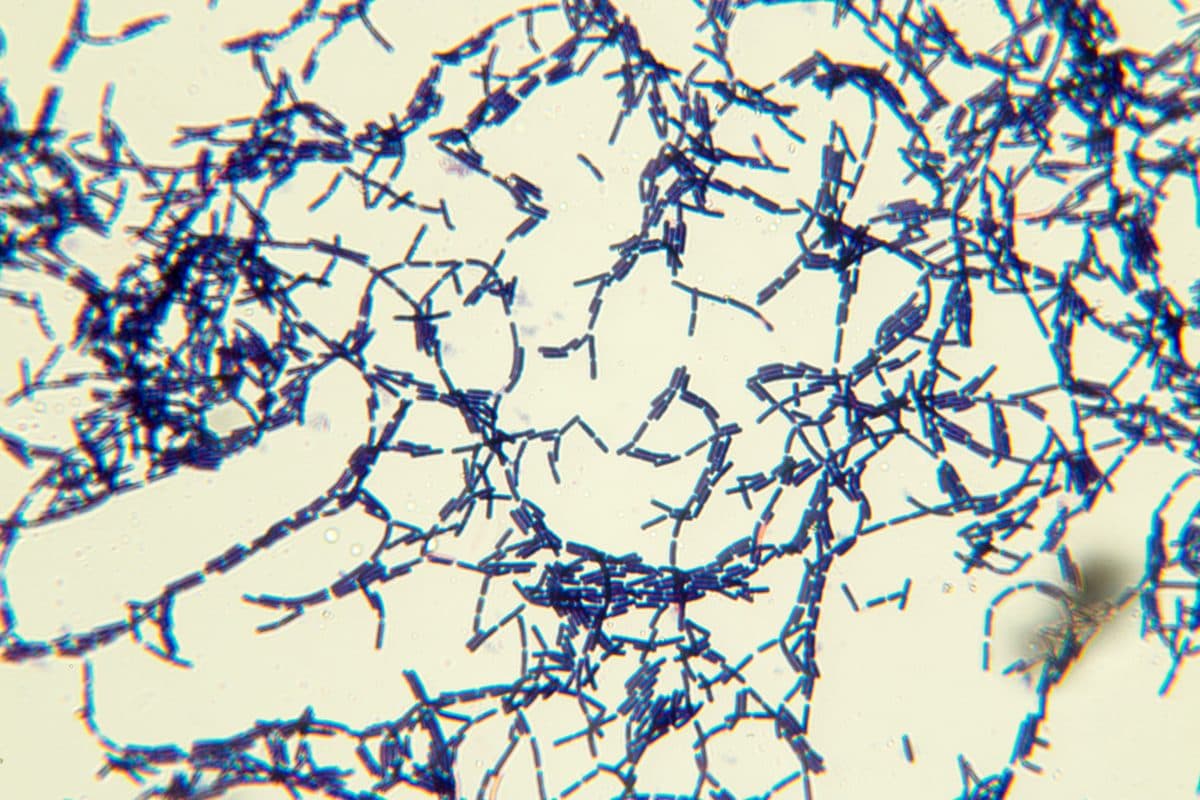
¿Por qué? Bacillus funciona en tratamientos secos
Bacillus es la fuente bacteriana más importante de exactamente estas enzimas, en particular las proteasas. También forma endosporas, un estado latente que sobrevive esencialmente intacto al secado, el calor y el tiempo, y luego germina al contacto con el agua y los alimentos. Para este trabajo los organismos que hacen el trabajo son precisamente los que mejor secan, por eso los dos formatos de plomo son secos y eso no cuesta nada biológicamente. Los organismos nitrificantes son el caso opuesto: no sobreviven en absoluto al secado, por lo que ningún producto seco puede cumplir con el permiso de amoníaco.
Lo que respalda el trabajo publicado
Las mezclas de proteasa, celulasa y lipasa reducen el total de sólidos suspendidos entre un 30 y un 50 por ciento y mejoran la sedimentación; la proteasa y la celulasa juntas superan a cualquiera de las dos por separado. Un estudio controlado informó una reducción del 33 por ciento de sólidos suspendidos volátiles.
Estas cifras son el mecanismo, no una afirmación sobre este producto: la enzima revisada por pares y el trabajo de hidrólisis en el que se basan se recopilan en el literatura científica.
05Especificación microbiológica
Las cifras, y con qué se mide cada una.
Aquí figuran las cifras publicadas en los documentos de producto. Cuando los documentos no publican ningún valor numérico, la fila lo indica en lugar de llevar una estimación.
- Recuento viable en la fabricación
- 2.2 billion CFU/mLUn recuento publicado en la ficha del producto; no se indica ninguna garantía al final de la vida útil.
- Recuento garantizado al final de su vida útil
- No publicadoNo se publica ningún recuento garantizado de células viables al final de la vida útil indicada para este producto.
- Cepas en la mezcla
- 7 Bacillus strains
- Rango de temperatura de funcionamiento
- Aplicar a 50°F o másUn umbral de aplicación tomado de la etiqueta del producto, no un intervalo de tolerancia completo.
- Rango de pH de funcionamiento
- No publicadoNo se publica ningún intervalo numérico de pH de trabajo para este producto.
- Nivel de bioseguridad
- No publicadoLa documentación del producto describe las bacterias como no patógenas pero no publica ninguna clasificación de nivel de bioseguridad.
- Vida útil
- 12 months
la gama
Otros formatos, y para qué sirve cada uno
Elija el formato según dónde se acumula el material y cómo se aplica el tratamiento. Los sólidos sumergibles llegan al lodo del fondo. Las bolsas solubles y los líquidos se dispersan en la columna de agua.
Mismo cometido — Dosificado o vertido, según lo permita la instalación.
En el resto de la gama
- Sedivore SpikeSólido denso que se hundeLodos de fondo orgánicos acumulados
- Sedivore PuckSólido sumergible dispersableLodos de fondo orgánicos acumulados
- SediLogic MaintainBolsa seca soluble en aguaDosificación de mantenimiento y carga orgánica general.
- Sedivore PolarBolsa seca hidrosoluble, mezcla para agua fríaLa carga orgánica de una laguna que funciona en frío
- SediLogic Maintain ConcentrateBolsa soluble de alta concentraciónCarga orgánica general en sistemas grandes
- SediLogic Maintain PlusBolsa seca hidrosoluble, alta concentraciónDosificación de mantenimiento y carga orgánica general.
- Sedivore Polar PlusBolsa seca hidrosoluble, alta concentración, clima fríoLa carga orgánica de una laguna que funciona en frío
- SediLogic Liquid FOGConcentrado líquido, dirigido a FOGGrasas, aceites y grasas, y los sistemas de recogida donde se acumulan