
Flüssiges Konzentrat, FOG-gezielt
SediLogic Liquid FOG
Ein Konzentrat, das eine Bacillus-Mischung mit Amylase-, Protease- und Lipase-Enzymen kombiniert und auf Fette, Öle und Fettstoffe sowie die mit ihnen transportierte Stärke und Proteine abzielt. Sein Platz ist das Sammelsystem – Fettabscheider, Abflüsse und Hebestationen – wo FOG das Material ist, das sich ansammelt, und nicht die Lagune selbst.
01Warum dieses Format
Fette, Öle und Fettstoffe sowie die Sammelsysteme, in denen sie gesammelt werden
Dies ist das einzige Mitglied des Sortiments, das oberhalb des Teichs ansetzt. Fette, Öle und Schmierstoffe sammeln und verfestigen sich dort, wo Abwasser gefasst und gepumpt wird, lange bevor es einen Teich erreicht, und eine enzymverstärkte Flüssigkeit ist das Format, das zu einem Abscheider oder Pumpensumpf passt. Es ist ein Kanalnetzprodukt und keine Teichbehandlung, und die Unterscheidung ist wichtig: Ob es zu einem Standort passt, ist eine Frage des Kanalnetzes, und das Dosierverfahren für Teiche gilt dafür nicht. Das sagen wir lieber, als es als etwas darzustellen, was es nicht ist.
Es funktioniert im in das sammelsystem dosiert – siphon, abfluss oder nassbrunnen, und es passt eine von fett dominierte ladung stromaufwärts der lagune, nicht die lagunendecke.
02Spezifikationen
Produktspezifikationen und Dokumente
Jede Angabe unten stammt aus einem Produktdokument. Wo die Dokumente keinen Wert veröffentlichen, sagt die Zeile das, statt eine Schätzung zu führen: eine Zahl, die sich später verschiebt, ist schlimmer als eine offen gelassene Lücke, denn ein Betreiber kann eine Bestellung darauf ausgelegt haben.
- Packungsgröße
- 5-gal-Eimer (19 l)
- Packgewicht
- Nicht veröffentlichtWird nach Volumen und nicht nach Gewicht verkauft.
- Versandgewicht
- 43.94 lbBerechnet aus dem Wassergewicht zuzüglich 1 kg Verpackungszuschlag.
- Paketpreis
- $480Richtwert. Fracht, Steuern und der Endpreis werden im geprüften Angebot festgelegt.
- Dosisleistung
- Nicht veröffentlichtFür diese Aufgabe ist keine revisionsgeführte Dosiermethode veröffentlicht, daher wird keine Menge bemessen.
- Lagerung
- Trocken und kühl lagern; den Behälter bei Nichtgebrauch fest verschlossen halten.
03Wann sollte man das nicht kaufen?
Wann ein anderer Ansatz sinnvoll ist
- Das Problem ist eine angesammelte Lagunenschlammdecke. Diese Mischung zielt auf Fette, Öle und Fettstoffe im vorgelagerten Sammelsystem ab; Eine Lagunendecke ist die Aufgabe des sinkenden Feststoffs.
- Die Ladung enthält keine nennenswerten Fette, Öle und Fettstoffe. Der Enzymschub verdient nur dort seinen Platz, wo FOG dominiert; Für allgemeine organische Belastung ist die Grundflüssigkeit geeignet.
- Das Material liegt an einer Stelle, an der ein Feststoff darauf dosiert werden kann. Ein Feststoff, der bis zum Material gelangt, ist überall dort der direktere Weg, wo die Anlage einen zulässt.
Der Dosierungsplaner prüft jeden dieser Punkte und sagt es Ihnen, anstatt Sie zu einem Angebot weiterzuleiten.
04Mikrobiologie
Was die Organismen tatsächlich mit dem Material machen.
Der Mechanismus ist die enzymatische Hydrolyse. Bacillus Arten scheiden Enzyme in ihre Umgebung aus, die große organische Moleküle in Fragmente zerlegen, die klein genug sind, um aufgenommen und verstoffwechselt zu werden. Die Organismen nehmen den Schlamm nicht direkt auf; Sie veröffentlichen die Werkzeuge, die es auseinandernehmen.
| Enzym | Wirkt weiter | Was das ist, in einer Lagune |
|---|---|---|
| Protease | Proteine und Peptide | Die Proteinfraktion abgesetzter Zulauffeststoffe und abgestorbener Biomasse. |
| Lipase | Fette, Öle und Fettstoffe | FOG, das schwimmt und konsolidiert, anstatt sich von selbst zu stabilisieren. |
| Amylase | Stärken und komplexe Kohlenhydrate | Kohlenhydratbelastung, typischerweise am stärksten bei Zuflüssen aus der Lebensmittelverarbeitung. |
| Cellulase | Cellulose | Pflanzenfasern und Papier, die einen großen Teil einer kommunalen Schlammdecke ausmachen. |
Warum Bacillus für Trockenprodukte geeignet ist
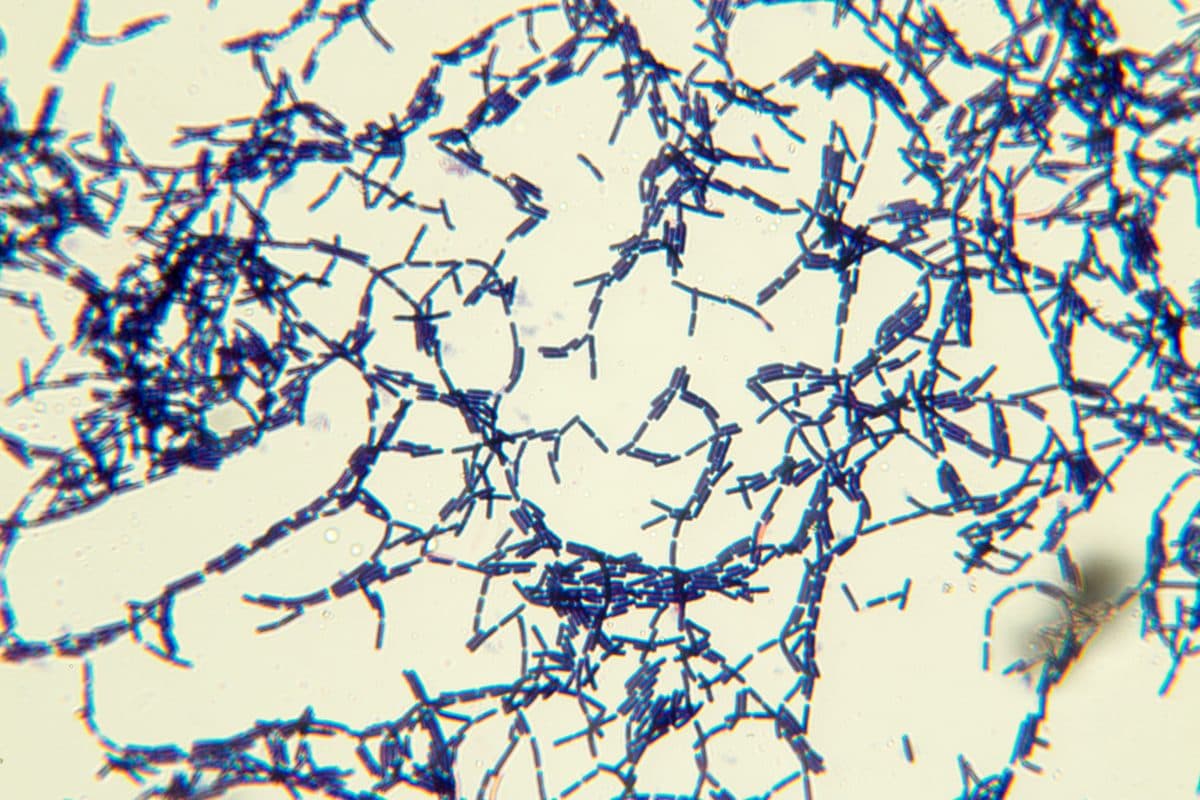
Bacillus ist die wichtigste bakterielle Quelle genau dieser Enzyme, insbesondere Proteasen. Es bildet auch Endosporen – einen Ruhezustand, der Trocknung, Hitze und Zeit im Wesentlichen unversehrt übersteht und dann bei Kontakt mit Wasser und Nahrungsmitteln keimt. Bei dieser Aufgabe sind es genau die Organismen, die am besten trocknen, weshalb die beiden Bleiformate trocken sind und das biologisch gesehen nichts kostet. Nitrifizierende Organismen sind das Gegenteil: Sie überleben die Trocknung überhaupt nicht, weshalb kein Trockenprodukt einer Ammoniakgenehmigung gerecht werden kann.
Was die veröffentlichte Arbeit unterstützt
Mischungen aus Protease, Cellulase und Lipase reduzieren die Gesamtmenge an Schwebstoffen um 30 bis 50 Prozent und verbessern die Sedimentation, wobei Protease und Cellulase zusammen die beiden allein übertreffen. In einer kontrollierten Studie wurde eine Reduzierung der flüchtigen Schwebstoffe um 33 Prozent berichtet.
Bei diesen Zahlen handelt es sich um den Mechanismus und nicht um eine Behauptung über dieses Produkt: Die von Experten überprüfte Enzym- und Hydrolysearbeit, auf der sie beruhen, wird im gesammelt wissenschaftliche Literatur.
05Mikrobiologische Spezifikation
Die Zahlen und woran sie jeweils gemessen werden.
Hier stehen die in den Produktdokumenten veröffentlichten Angaben. Wo die Dokumente keinen Zahlenwert veröffentlichen, sagt die Zeile das, statt eine Schätzung zu führen.
- Lebendfähige Anzahl bei der Herstellung
- 700 Millionen CFU/mLEine auf dem Produktdatenblatt veröffentlichte Zahl; eine Garantie zum Ende der Haltbarkeit wird nicht angegeben.
- Garantierte Anzahl am Ende der Haltbarkeitsdauer
- Nicht veröffentlichtFür dieses Produkt ist keine garantierte Keimzahl am Ende der angegebenen Haltbarkeit veröffentlicht.
- Sorten in der Mischung
- Mehrere Bacillus-Stämme; Anzahl nicht veröffentlicht
- Betriebstemperaturbereich
- Nicht veröffentlichtFür dieses Produkt ist kein numerischer Betriebstemperaturbereich veröffentlicht.
- Betriebs-pH-Bereich
- Nicht veröffentlichtFür dieses Produkt ist kein numerischer pH-Betriebsbereich veröffentlicht.
- Biosicherheitsstufe
- Nicht veröffentlichtFür dieses Produkt ist keine Biosicherheitsstufe veröffentlicht.
- Haltbarkeit
- 24 months
Das Sortiment
Andere Formate und wofür jedes gedacht ist
Wählen Sie die Form nach dem Ort der Ablagerung und der Art der Dosierung. Sinkende Feststoffe zielen auf Bodenschlamm. Lösliche Beutel und Flüssigprodukte verteilen sich in der Wassersäule.
Weiteres im Sortiment
- Sedivore SpikeDichter, sinkender FeststoffAnfallender organischer Bodenschlamm
- Sedivore PuckVerteilbarer SinkfeststoffAnfallender organischer Bodenschlamm
- SediLogic MaintainTrockener, wasserlöslicher BeutelErhaltungsdosierung und allgemeine organische Belastung
- Sedivore PolarTrockener wasserlöslicher Beutel, KaltwettermischungOrganische Fracht in einem kalt laufenden Teich
- SediLogic Maintain ConcentrateHochkonzentrierter löslicher BeutelAllgemeine organische Last auf großen Systemen
- SediLogic Maintain PlusTrockener wasserlöslicher Beutel, hohe KonzentrationErhaltungsdosierung und allgemeine organische Belastung
- Sedivore Polar PlusTrockener wasserlöslicher Beutel, hohe Konzentration, KaltwetterOrganische Fracht in einem kalt laufenden Teich
- SediLogic LiquidFlüssiges KonzentratOrganische Fracht in Systemen, in die kein Feststoff dosiert werden kann
- SediLogic Liquid ColdFlüssiges Konzentrat, KaltwettermischungOrganische Fracht in flüssig dosierten Systemen bei kaltem Betrieb